
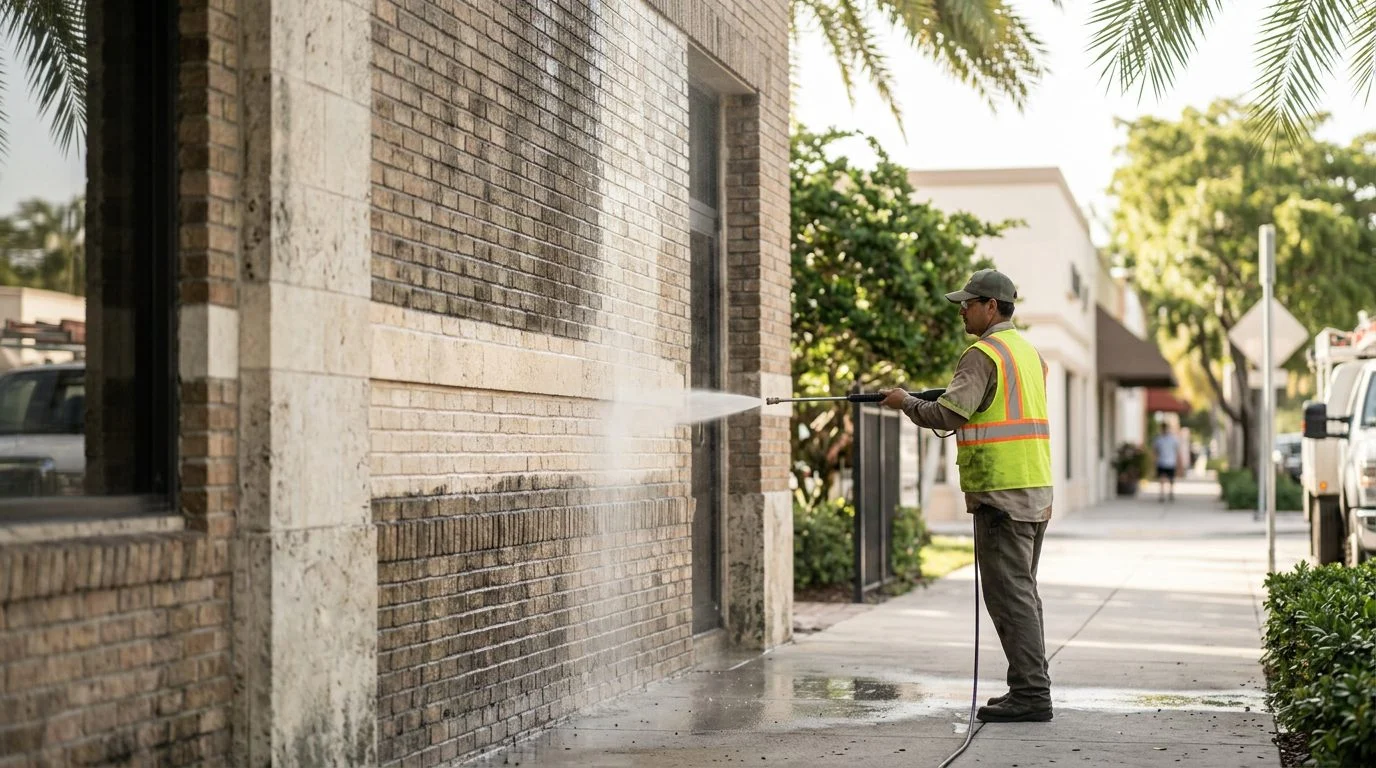
Pressure Washing | South Florida
Can You Pressure Wash Siding in South Florida? Clean It Without Causing Damage
Humidity, salt air, and summer storms leave siding dirty and stained. Here is how to clean it well without stripping paint, cracking panels, or forcing water into the seams.
By Ryan Jurney · Published November 18, 2026
Maybe the siding looks gray after the rainy season, and the pressure washer in your garage looks like the quick fix. Can you use it? Often, yes, but the setup decides whether the siding comes out clean or damaged.
This guide covers the questions condo board members, building managers, and family members commonly ask in South Florida, where humidity and rainy-season mildew build up quickly on exteriors.
The Short Answer: Yes, Often, But Setup Decides the Result
A pressure washer can clean many types of siding, but pressure, nozzle, distance, and technique decide whether the surface ends up clean or damaged.
“Pressure washer” covers a wide range of equipment. The same machine can be gentle in one set of hands and harsh in another, depending on how it is set up. Engine strength is only part of the picture. Water flow, the tip you choose, how far the wand sits from the wall, and how long you hold it in one spot all matter. Most siding damage comes from a setup that is too aggressive for the surface, not from the machine alone. In South Florida, the real goal is removing grime and mildew without forcing water into the wall. That is a higher bar than it sounds. Before you start, know what your siding is made of, how old it is, and whether it has cracks or loose trim. Those details shape every other choice in this guide. Plan the job the way you would plan any exterior project: test first, then work in controlled passes.
If you're responsible for a building's exterior and unsure whether a pressure washer is safe for its siding, our team is glad to talk it through with you. Talk it through with our team — the first consultation is free, confidential, and carries no obligation.
Why the Siding Material Changes the Answer
Each siding material reacts to water differently, so start by knowing what your walls are made of.
- Vinyl: flexible, but concentrated spray can crack panels, warp them, or pull them loose at seams and nail heads.
- Fiber cement and wood: tougher in some ways, but forceful spray can wear paint or protective finish, especially where it’s already weathered. Water can also soak into the material beneath.
- Aluminum and other metal: usually handles moderate cleaning, but dents, loose trim, and painted finishes still need care.
Older siding, painted surfaces, and walls with existing cracks or gaps need more caution than newer, intact surfaces. A crack that looks minor can let water travel behind a panel, where you can’t see it. Look closely at seams and edges before you begin, and treat anything loose as a reason to slow down. Mixed materials are common on South Florida buildings, so check each section of wall separately rather than assuming one setting fits all.
How Strong of a Pressure Washer to Clean Siding?
A PSI rating alone does not tell you whether a pressure washer is safe for siding.
Pressure matters, but water flow, nozzle type, and distance from the surface matter just as much. A higher-rated machine can clean siding gently when it has a wide tip and runs at a safe distance. A lower-rated machine can still damage a surface if the tip is narrow and the spray stays in one spot. Wide fan-tip nozzles spread force across more area, so they are the usual choice for siding over narrow, concentrated tips.
Keep the wand moving in even passes. Spraying close and in one spot is the fastest way to damage panels, lift edges, or drive water into seams. Start at a wider distance and move closer only if the surface stays intact and the grime still won’t lift.
Is It Safe to Pressure Wash Siding?
Pressure washing siding can be done safely when the wall is sound and the spray is controlled, but the main risks are real.
The main risks are water forced behind panels, cracked or lifted vinyl, stripped paint or protective coatings, and mildew driven deeper into joints. Once water gets behind siding, it can stay trapped and feed new growth. Windows, doors, vents, and light fixtures need extra care. Angle the spray downward and away from openings so water runs off rather than getting pushed in.
Test a small, hidden area first. Look for lifting, streaking, or color change before you work across the full wall. Take breaks to check your work as you go. In South Florida’s humid climate, mildew can return quickly if moisture stays in the seams. A clean that drives water into the wall can create new problems later, which is why setup matters more than speed. The right approach depends on the siding, its age, and its condition, and a professional assessment can address those details.
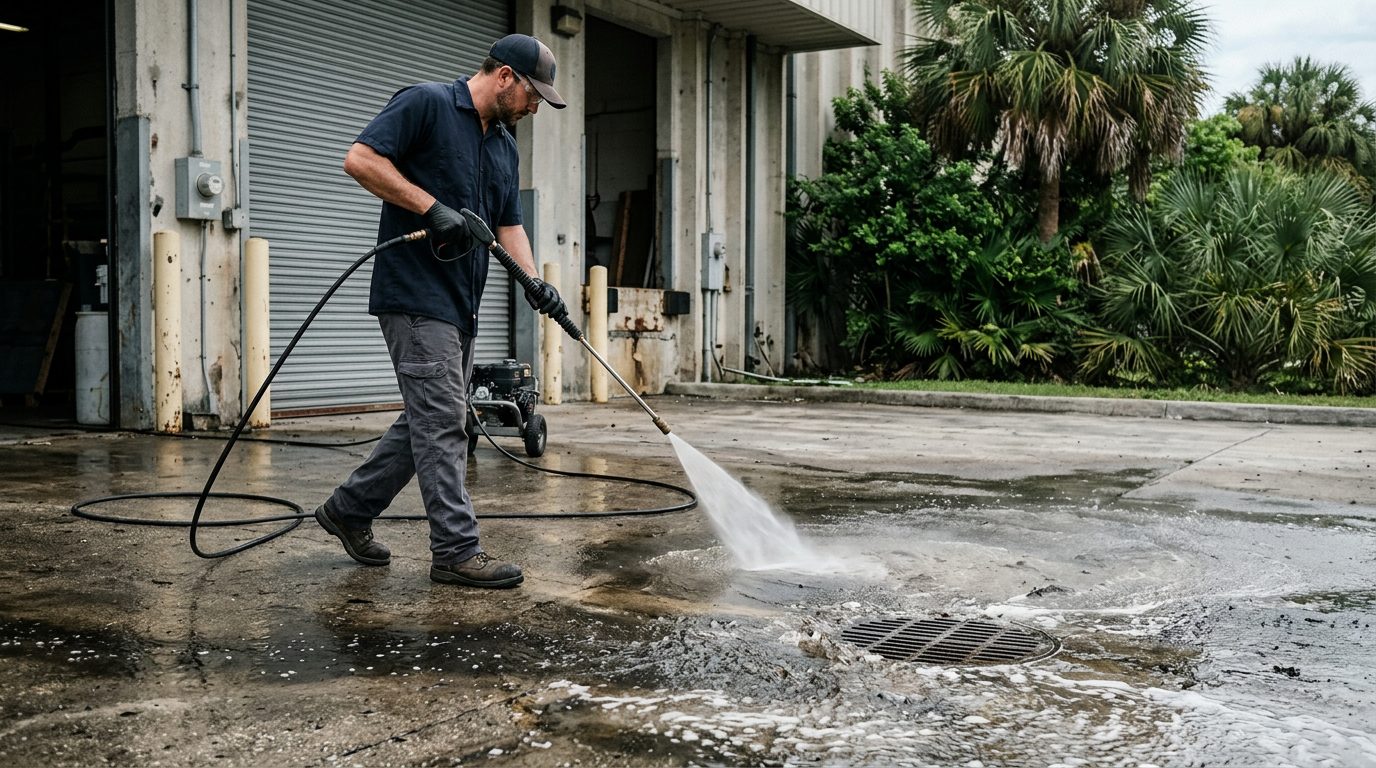
Is It Better to Soft Wash or Pressure Wash Vinyl Siding?
For most vinyl siding, soft washing is the gentler choice because it cleans with low-pressure water and a cleaning solution rather than force.
Soft washing applies a cleaning solution to the surface, lets it work, and then rinses it away. It is commonly used for mildew and algae, which are typical in South Florida’s humidity and rainy season. Pressure washing can still fit heavy grime on certain surfaces when it is set up correctly. On vinyl, though, it is usually the less forgiving option.
The cleaning product matters too. It should be suited to siding and rinsed thoroughly, because leftover residue can leave streaks. Chemical labeling and Safety Data Sheets are part of the picture. Before any work begins, know which solution will be used and how it will be rinsed.
What Professionals Use to Clean Vinyl Siding
Professionals usually use low-pressure equipment with a siding-appropriate cleaning solution rather than a high-force wand.
Equipment often includes a low-pressure applicator or soft-wash system. Rinse tips are wide, flow is controlled, and extra care goes to seams, windows, and edges. Protecting nearby landscaping, plants, and walkways matters just as much. Cleaning solution can run off and harm plantings if it is not managed.
Timing matters too. Avoid direct sun during cleaning, since solution can dry on the surface before it is rinsed, and plan around rain. Dry, calm weather gives the rinse the best chance to clear the wall evenly. Wet walkways after cleaning raise slip risk. Our team offers pressure washing alongside landscape services and floor care, so exterior cleaning and walkway care can be planned together.
Not sure what your next step is?
Talk it through with our team — the first consultation is free, confidential, and carries no obligation.
Signs Your Siding Needs a Professional Assessment
Visible cracks, loose panels, warped sections, or gaps at trim and corners are signs your siding needs a closer look before any cleaning.
Mildew or dirt that returns quickly after cleaning can point to moisture or drainage problems. Cleaning alone will not fix those, so they are worth examining. Painted or previously repaired siding may have a weathered finish that peels under spray. Multi-story buildings, balconies, and terraces are harder to reach safely from the ground and need their own plan.
Can pressure washing damage vinyl siding?
Yes. Concentrated spray can crack, warp, or loosen vinyl panels, especially at seams and nail points.
Does pressure washing remove mildew from siding?
It can lift surface mildew, but forceful spray can also push moisture and growth deeper into seams.
Can you pressure wash siding in the rainy season?
Wet walls need careful setup, because water already sits in seams and can travel behind panels.
Talk With Our Team About Your Siding
Our team can help you decide what a safe cleaning approach looks like for your property.
You might be a condo board member watching mildew spread after the rains, or a relative who inherited a house with dirty walls you never planned to manage. Either way, the decision in front of you matters, and it is worth getting right. Bring what you know about the building, including its age, the siding material, and where the mildew shows up. Those details help our team give you a clearer picture. Whether the wall belongs to a single-family home or a larger building, the first step is the same: understand the surface before the spray starts.
Reach out through our contact page to talk about your siding, its condition, and what a careful cleaning plan would involve.
Your first consultation is free, confidential, and comes with no obligation to continue.
Why Property Managers Choose Gator Protection
Pressure Washing Matched to the Surface
We adjust water pressure and cleaning method to the material, so the job removes buildup without harming the finish.
Careful Handling of Siding and Trim
Vinyl, stucco, and painted surfaces each get a gentler approach, with extra care at seams, fasteners, and window edges.
Serving South Florida
We provide pressure washing alongside our janitorial and landscape maintenance services in Miami-Dade, Broward, and Palm Beach counties.
Scheduled Around Your Operations
Exterior work can be planned so tenants, guests, and daily operations are disrupted as little as possible.
Ask Before You Spray
High-pressure spray can crack vinyl panels, lift paint, and push water behind siding. Have the surface assessed before any high-pressure cleaning begins.
Common South Florida Siding Materials
Vinyl Siding
Common on many buildings and easy to crack or warp under concentrated spray. A low-pressure wash with a suitable cleaning solution is usually the safer choice.
Stucco
Porous and textured, so it can hold mildew and dirt. Cleaning needs to balance removing growth with avoiding erosion of the surface.
Painted Wood or Fiber Cement
Paint can peel or chip under strong pressure. Gentle cleaning helps protect the coating and extends the time between repaints.