
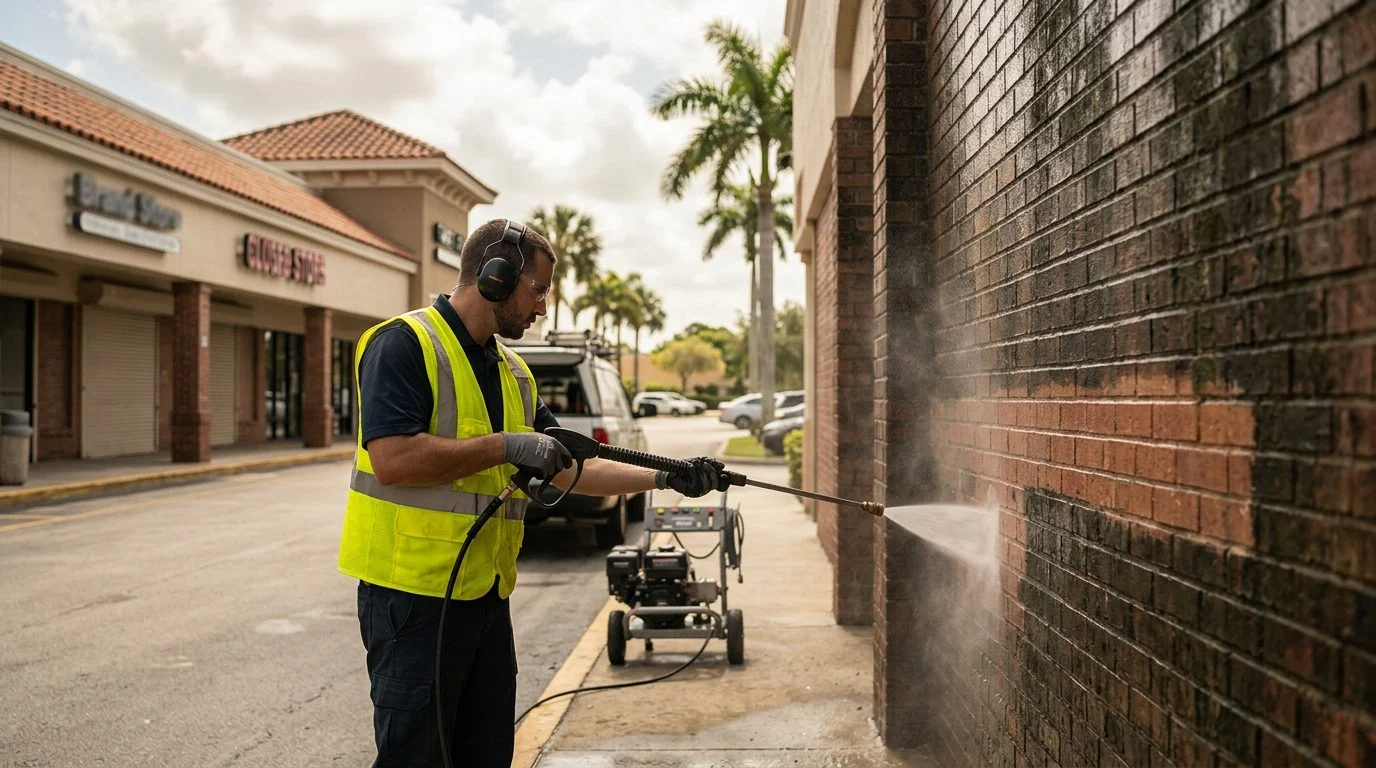
Pressure Washing | Broward County Retail
Night Pressure Washing for Your Broward Store: Is It a Good Fit?
Shoppers, staff, and nearby neighbors all shape when outdoor cleaning can happen. Here is how to plan a night wash that keeps your property clean and your operations running smoothly.
Start With a Conversation
Free
First consultation, confidential, with no obligation to continue
South Florida
Broward, Miami-Dade, and Palm Beach counties
By Ryan Jurney · Published November 25, 2026
If you manage a retail store in Broward County, the first question is usually whether pressure washing can happen when the doors are closed. Yes, after-hours pressure washing is a workable option for many Broward retail sites. Whether it fits your store turns on the site itself: access, nearby occupants, drainage, and who controls the shared areas. This page covers each of those factors and the surfaces usually washed after close.
Short Answer: Can Pressure Washing Be Scheduled at Night?
Yes, pressure washing can often be scheduled after close at a Broward retail store. The store’s open hours set the starting point, and the crew builds the work window around the closing and reopening times rather than against them. A night window is not automatic. The site has to allow safe work, handle wash water properly, and dry enough before customers return. Most of the planning happens before the first pass. A walkthrough with the manager shows which surfaces are in scope, which ones sit near entrances or neighbors, and where the water will go. Those facts decide whether the schedule holds.
If your store's open hours leave only a short daytime window, we can review your entrance, sidewalk, and lot and talk through whether night washing fits. Talk it through with our team — the first consultation is free, confidential, and carries no obligation.
Why Retail Sites Often Look at Night Work
Retail sites look at night work because daytime washing puts crews and customers in the same space. Entrances, vestibules, and pickup lanes stay busy while the store is open. Hoses run across walkways, and wet pavement can be slick for shoppers and staff. Moving the job after close clears the area of foot and car traffic. It also gives surfaces time to dry before the doors open again. A clear work zone makes it easier to keep the crew, equipment, and customers apart.
The storefront sidewalk and entry vestibule are the most common reasons a manager asks. These surfaces collect grime from foot traffic and weather, and they are the first thing shoppers see. Parking and pickup lanes pick up grease and dirt from cars. Washing them during business hours often means cones, partial closures, and interruptions. A night window avoids most of that.
This timing choice is about logistics and safety. It does not change the work itself, so the crew still needs a clear plan for each surface.
Site Factors That Decide Whether a Night Window Fits
A night window fits when the site has safe light, a clear water path, and a plan for runoff. Six factors matter most.
Access and lighting. The crew needs working light, clear paths to the water source, and a marked work zone around entrances and parking. Dark or cluttered areas slow the job and raise risk.
Noise near neighbors. Pressure washing is louder than most night activity. If the store backs onto apartments or another tenant, noise becomes the main constraint. Work schedules can be planned around the hours that suit the site and the people who use it.
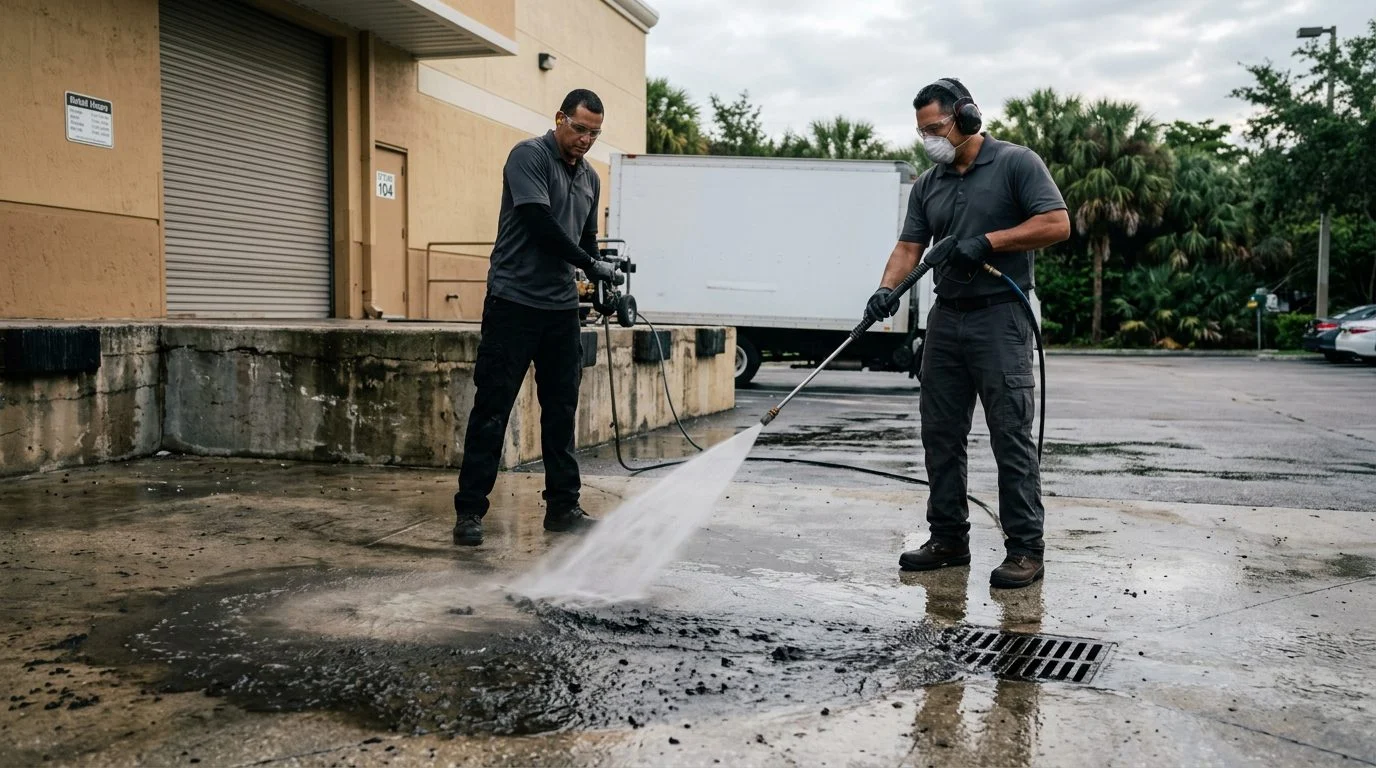
Drainage and runoff. Runoff can also carry pollutants from paved surfaces. Wash water needs a path that does not flood entries or drains overnight, and a plan so it does not reach a storm drain untreated.
Surface condition and drying time. A surface must be dry, or dry enough, before customers walk on it. That affects how late the work can run and the order in which surfaces are washed.
Shared property rules. In a shopping center, the lot, sidewalks, and dumpster areas may belong to the landlord or a property manager. Confirm who controls each area before booking.
Equipment and water supply. Confirm where the crew can connect to water and where equipment will sit during the work.
Surfaces Commonly Scheduled After Close
The surfaces washed after close are usually the ones customers don’t walk on during open hours. They are also the ones that are hardest to clear while the store runs.
Storefront sidewalks and entry walkways come first. They build up grime between visits and show the most wear.
Parking lot sections and drive lanes are next. Oil marks and tire grime need targeted treatment, and a crew can work section by section so the lot stays usable.
Dumpster pads, loading areas, and rear service corridors are good candidates because customers don’t use them. Their wash water still needs a plan, as covered below.
Building exteriors and canopy areas can be sequenced in sections, so the work moves from one zone to the next through the night.
Many stores set up a recurring schedule after a first walkthrough. That way the night window matches the store’s routine. Our day porter service can also handle entrance upkeep between washings.
Planning a Night Pressure Washing Schedule With Store Operations
Start with the store’s closing time, reopening time, and any receiving or delivery hours that overlap the window. Those times set the outer limits of the schedule.
Next, map each surface in scope. Mark which ones sit near entrances, neighbors, or drains. A simple sketch of the lot and sidewalks is enough to start.
Confirm lot and sidewalk control with the landlord or property manager when the store doesn’t own those areas. Get that approval in writing before the crew arrives.
Plan the wastewater before the first pass.
Finally, agree on a shutdown and cleanup routine. The area should be safe, dry, and clear when the store opens. Our pressure washing services page covers the full scope of the work, and this page covers the timing.
Next Step: Review Your Store’s Hours and Surfaces
If your store’s open hours leave only a narrow daytime window, a site review can show whether night washing fits. Think about the entrance, sidewalk, and lot, and the neighbors and drains that sit close to them. Those details shape the work window more than any general rule.
Reach out through our contact page by form or by phone, and our team can talk through your hours and site conditions. La consulta inicial es gratuita, confidencial y sin compromiso de continuar.
Bring the closing and reopening times, a rough list of areas you want washed, and the name of whoever controls the lot. That gives us what we need to talk through a realistic schedule.
Not sure what your next step is?
Talk it through with our team — the first consultation is free, confidential, and carries no obligation.
FAQ
Can pressure washing be done at night in Broward County?
Often, yes. Whether it fits depends on access, lighting, noise near neighbors, drainage, and who controls the shared areas.
Who decides if a parking lot can be washed after close?
In a shopping center, the landlord or property manager often controls the lot, so confirm that before booking.
What Makes Night Washing Work
Timing That Fits Your Hours
A night window can keep parking lots, entrances, and walkways clear of customer traffic and daytime deliveries.
Safe, Well-Lit Work Zones
Good lighting and clear signage protect crews, shoppers, and staff while the work is underway.
Respect for Neighbors
Equipment noise carries after dark, so planning around nearby residences and businesses is part of the job.
Coordination With Property Management
Shared lots and storefronts often involve more than one decision-maker, so details should be confirmed in writing before scheduling.
Confirm Access Before You Book
Do not schedule a night wash until you have confirmed who controls the parking lot, sidewalks, and any shared areas, and that the work is approved for those spaces.
Four Factors to Review First
Access and Layout
Map the areas to be washed, the drive lanes, and where equipment and water will be staged.
Lighting
Confirm there is enough light for crews to work safely and for the site to be inspected afterward.
Noise and Neighbors
Consider nearby homes, offices, and tenants, and plan quieter tasks or shorter windows where needed.
Drainage and Runoff
Plan how water will flow away from walkways and storefronts so the wet surface does not create hazards.