
Pressure Washing | Miami Condos
A Pressure Washing Schedule Built Around Your Condo Building
Learn how often South Florida condo buildings should be pressure washed, zone by zone, and how each visit's notes shape the plan going forward.
By Ryan Jurney · Published November 4, 2026
So, how often should a condo be pressure washed Miami? Short answer: no single interval fits a whole building. Each zone of a Miami condo dries, soils, and grows mildew at its own pace. Each zone needs its own schedule.
This guide shows how to build that schedule. It’s a framework with factors to weigh, not a promised result for any one building.
Why a Miami Condo Has No Single Pressure Washing Interval
One interval for the whole property usually misses some areas and overspends on others.
If you manage a condo or sit on its board, you may have inherited a cleaning calendar. You might be answering resident complaints about dirty walkways or streaked walls. Or you may be preparing a budget request for the next cycle.
A building isn’t one surface. A lobby entry sees heavy foot traffic every day. A north-facing wall under a tree may stay damp for much of the week. Treating both the same wastes money on one and leaves the other dirty.
Gator Protection, Inc. provides pressure washing services across South Florida. This page focuses on the scheduling method. Our pressure washing services page covers the wider service picture. The method works in three steps: map the zones, set a starting interval, and adjust it after each visit.
Not sure what your next step is?
Talk it through with our team — the first consultation is free, confidential, and carries no obligation.
Map the Property by Surface and Traffic Zone
Start by dividing the property into zones. Each zone gets its own starting interval.
Ground-level walkways and lobby entries. These take daily foot traffic. Dirt and residue build up quickly, so they usually need the shortest cycle.
Pool decks and pool areas. Algae and slick film form on wet concrete. Slip risk makes timing important. Plan these visits around pool use.
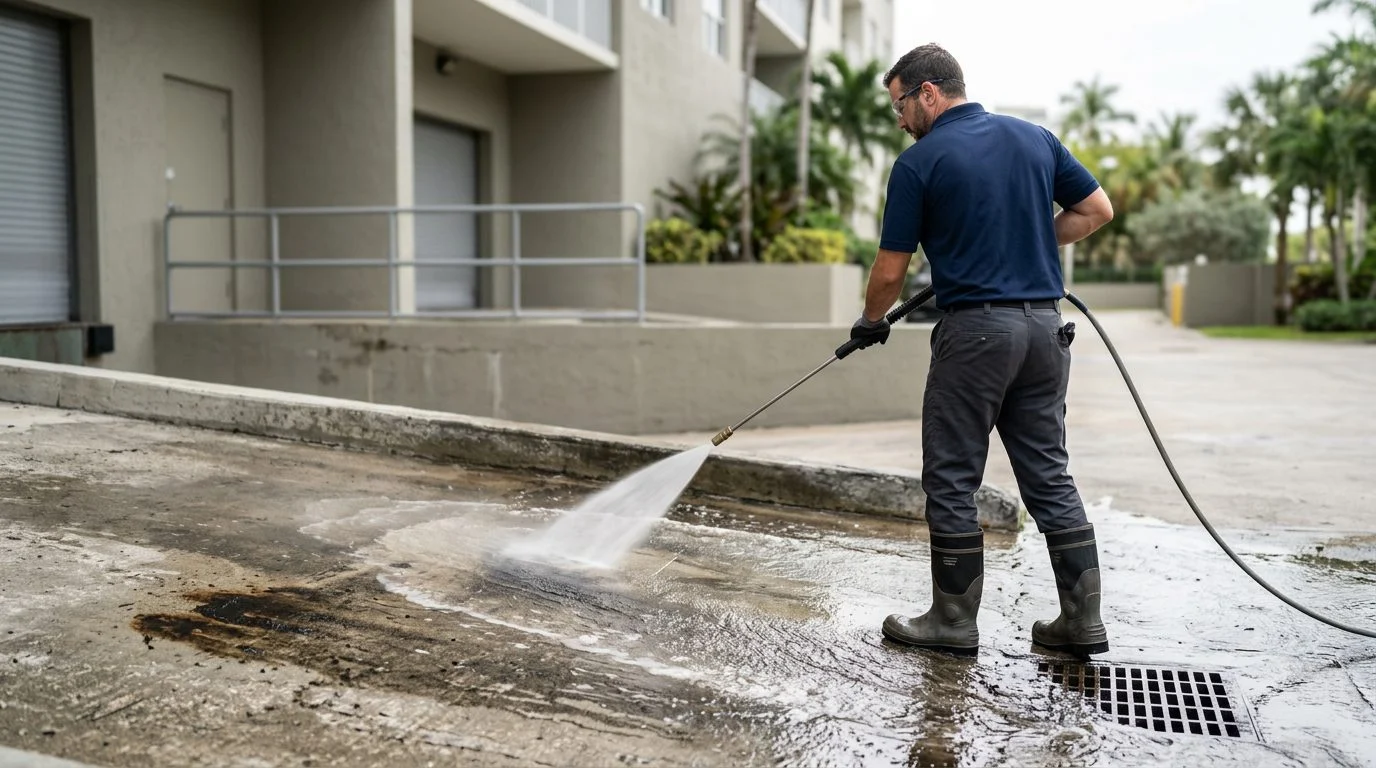
Parking structures and drive lanes. Oil, grit, and tire marks collect here. Garage floors often need their own calendar, separate from the building face.
Building walls and balconies. Facades usually change more slowly than walkways. Their cycle depends on shade, exposure, and the paint or finish underneath.
Dumpster pads and trash enclosures. These hold food waste and odors. They need a cycle that matches trash pickup.
Record every zone on one property map. A single map lets the board see the whole plan at a glance.
Local Conditions That Shorten or Lengthen the Interval
South Florida’s humidity, rain, and salt air can move a surface up or down the calendar.
Humidity and heavy seasonal rain keep shaded surfaces damp longer. Mold, mildew, and algae grow in damp spots. A wall that stays wet for days needs attention sooner than a sunny one.
Shade from mature trees and nearby buildings holds moisture on surfaces. The shaded side of a building often needs a shorter cycle than the sun-facing side.
Salt-laden air near the coast can leave a film on exterior surfaces. Walls closer to the water deserve a closer look during inspections.
Irrigation overspray is a common cause of repeat soiling. Sprinklers that hit walls and walkways leave minerals and dirt behind. The UF IFAS GI-BMP program trains landscape professionals on irrigation and water quality. Fixing the spray pattern can reduce how often walls need cleaning.
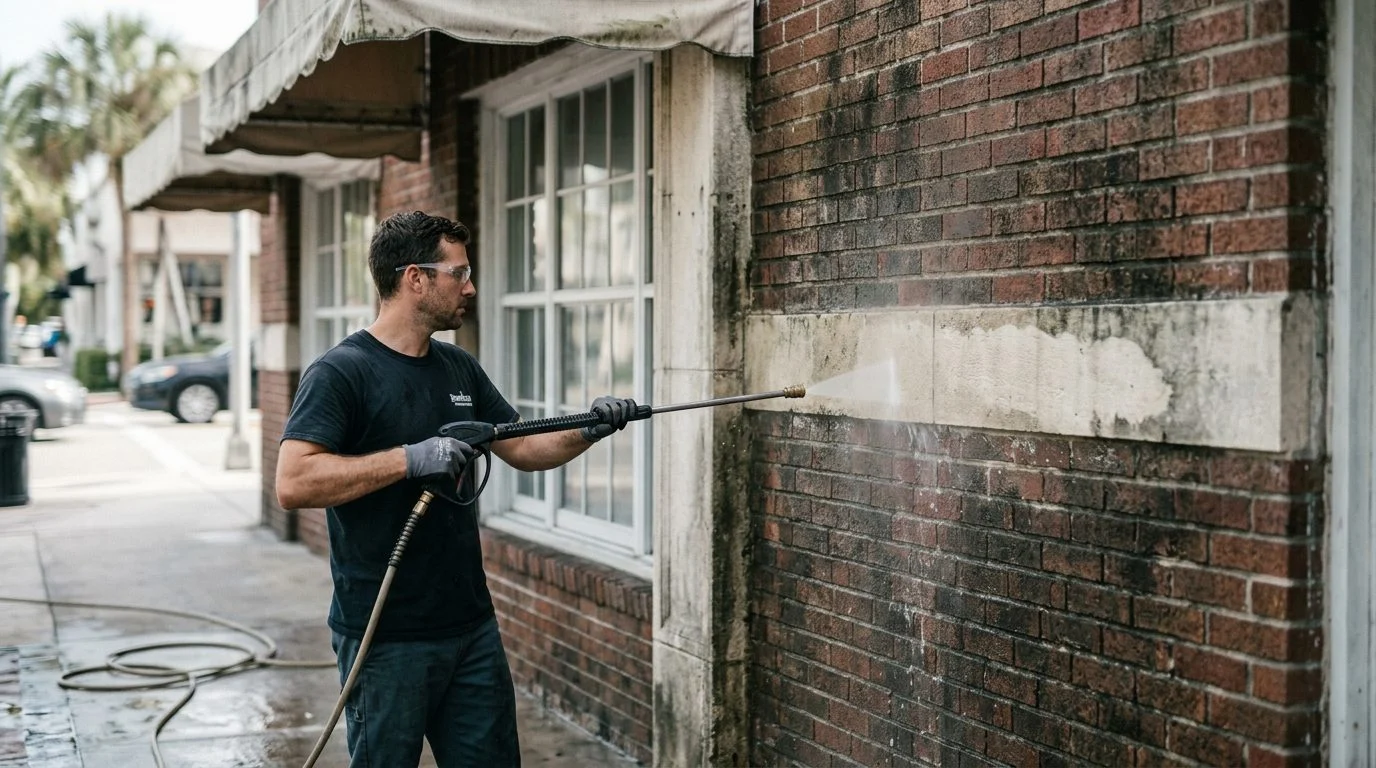
Surface material matters too. Painted masonry and stucco need lower pressure and gentler technique. Higher pressure can damage them.
When Mildew and Algae Should Move a Surface Up the Calendar
A surface moves up the calendar as soon as you see early signs of growth.
Watch for dark streaks, green or black spots, and slippery film. North-facing walls and shaded corners usually show these first. Slick residue on walkways is a safety issue, not only a look issue.
Growth can return within a short time after cleaning in humid, shaded conditions. A wall that looked clean last month may show spots again. That’s why checking between visits matters more than waiting for complaints.
Adjust the interval for the affected zone only. Don’t clean the whole building more often. Shorten the cycle for the shaded north wall and keep the sunny side on its plan.
Log each sighting with the zone, the date, and what you saw. After a few cycles, the log shows whether a zone needs a shorter or longer interval.
Have questions about what happened?
Ask our team directly. The first conversation is free, confidential, and there is no obligation to continue.
Building a Schedule the Board Can Review
A workable schedule starts with a baseline for each zone and changes based on inspection notes.
Set a baseline interval for each zone. After every visit, tighten or loosen it based on what the crew and manager observed.
Keep a simple inspection log. Record the date, the zone, the condition found, and the work performed. The log shows the board why the schedule changed.
Putting a standing time to check the log on the meeting agenda keeps it useful.
Plan the calendar around residents too. Schedule heavy work outside times when residents need clear access to walkways, pools, or garages. Coordinate with any painting or sealant work, so a surface isn’t cleaned right before it’s repainted or sealed.
Common Scheduling Mistakes to Avoid
The most common mistake is using one interval for every surface.
- One interval for everything. It ignores shaded walls and busy walkways.
- Pushing pressure to speed up work. Higher pressure can damage painted and stucco finishes. Slow, even technique protects them.
- Cleaning only after complaints. Growth sets in between visits. Residents then see the problem first.
- Skipping inspection. Without notes, the schedule never matches real conditions.
- Ignoring overspray. Walls keep resoiling while sprinklers still hit them.
Budgeting for the Schedule and Starting the Conversation
A budget request is easier to approve when each cost ties to a named zone and a logged inspection.
Present the calendar as a list of zones, intervals, and costs. Attach the log that supports each change. Boards respond well to specifics.
Decide early how the work will be funded. Florida law defines a special assessment as any assessment other than the one in the annual budget. Work outside the adopted budget may fall under special assessment rules.
If you’re still asking how often a condo should be pressure washed in Miami, or your board is planning a first exterior cleaning cycle, our team can help you map it. Gator Protection, Inc. offers a free first consultation, which is confidential and carries no obligation to continue. Reach out through our contact form or call the office to walk through your building’s zones.
How often should a condo be pressure washed Miami?
Set a separate interval for each zone, not one number for the whole building. Adjust each interval using inspection notes from every visit.
Does sprinkler overspray stain condo walls?
Yes, overspray can leave minerals and dirt on walls and walkways. Fixing the spray pattern can reduce how often those surfaces need cleaning.
Can pressure washing damage stucco?
It can. Higher pressure can damage painted and stucco surfaces, so pressure and technique should match the surface.
Want to know where you stand?
Tell us what happened and our team will walk you through the options available to you, at no cost.
How We Build Your Pressure Washing Schedule
Zone-by-zone intervals
Entrances, walkways, facades, and garages each get their own cleaning interval instead of one number for the whole property.
Adjusted from site notes
Our team records what each visit finds and uses those notes to refine the schedule over time.
Care for building surfaces
We set pressure and methods to suit each surface so cleaning stays effective without unnecessary wear.
Planned around your residents
Visits can be timed to limit disruption to residents, staff, and daily building traffic.
Watch for Sprinkler Overspray
Irrigation that sprays walls, windows, or walkways can leave minerals and dirt behind. Correcting the spray pattern can reduce how often those surfaces need cleaning, so we check it during our visits.
Typical Cleaning Rhythm by Zone
Entrances and lobbies
High foot traffic and visible surfaces often call for the most frequent washing, sometimes monthly or more.
Walkways and pool decks
Algae, grime, and tracked-in dirt usually build up steadily, so these areas are often cleaned on a recurring schedule every few months.
Building facades
Exposure to sun, rain, salt air, and dust determines how quickly walls build up staining, so facades are scheduled by condition rather than a fixed date.
Parking structures and garages
Oil, road grime, and moisture call for periodic washing, with the interval set by traffic levels and what each inspection finds.