
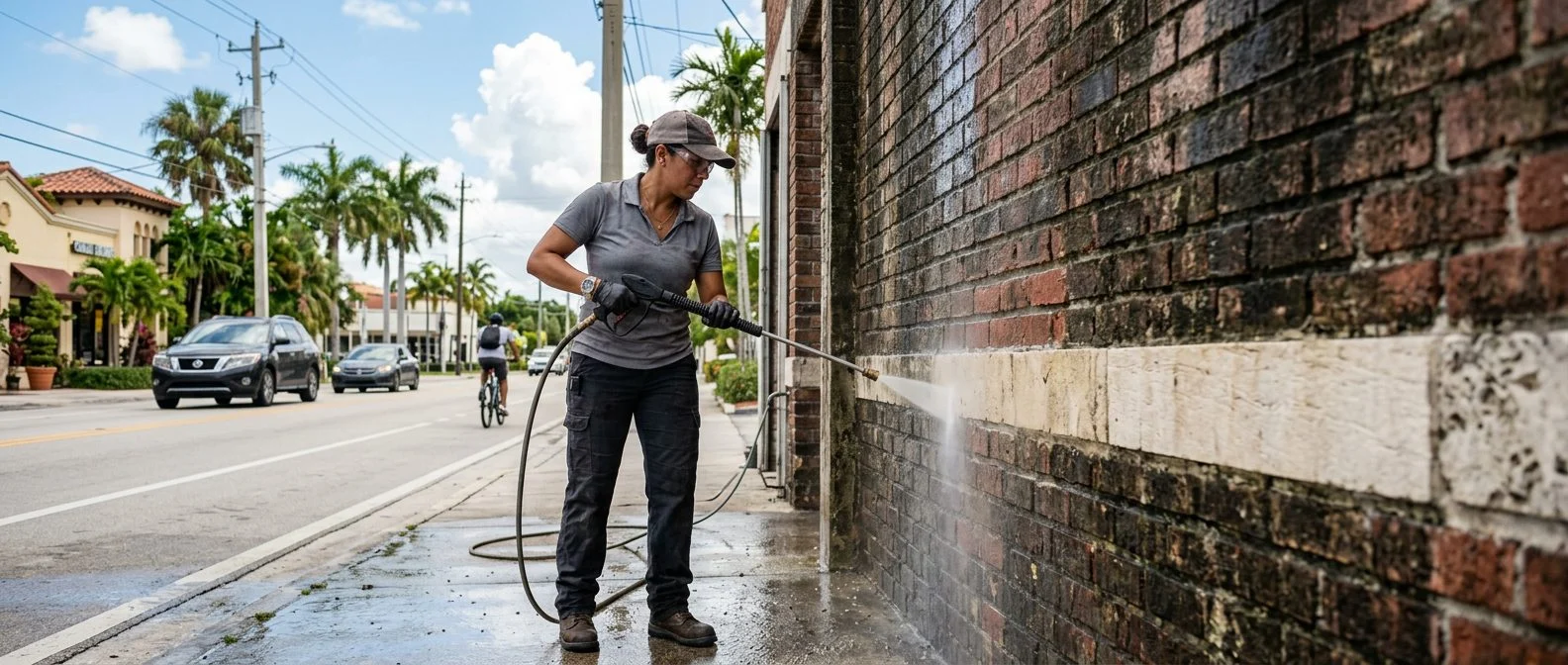
Pressure Washing · South Florida
Thinking About Pressure Washing? Start With the Right Pressure
Every surface has its limits. Tell us what you need cleaned, and our team will help you plan a careful approach that fits the material.
By Ryan Jurney · Published November 18, 2026
You may be staring at a dirty siding wall or a stained driveway and wondering if a 2000 PSI washer can handle it. For many house exteriors, the answer is yes. But pressure is only one piece. The surface, the water flow, the nozzle tip, and your distance from the wall all shape whether the job cleans well or causes damage.
Is 2000 PSI Enough for a House?
Yes, for many surfaces, 2000 PSI is enough, but it is not a one-size answer. PSI, or pounds per square inch, measures how hard the stream hits one spot. A 2000 PSI unit is a moderate-pressure machine, not a heavy-duty one. That makes it a practical choice for many house jobs. Think of the number as a starting point, not a rule. A stain that won’t budge is a sign to adjust your technique, not to raise the pressure. Most damage comes from using the wrong tip or standing too close, not from the rating on the box.
If you're facing an exterior decision for a home or building you didn't plan for, our team is glad to talk through your surfaces and timing with you. Talk it through with our team — the first consultation is free, confidential, and carries no obligation.
What PSI and GPM Mean for Cleaning
PSI sets the force of the stream. GPM, or gallons per minute, sets how much water reaches the surface each minute. Flow matters as much as force. A high-PSI wand with little water can blast one stain but leave a slow, streaky job across a whole wall. A moderate machine with more flow often rinses faster and more evenly. A low-flow machine can also leave soap residue behind and make a big job drag. Think of PSI as the punch and GPM as the rinse. When you compare machines, look at both numbers, not just the pressure rating.
How 2000 PSI Works on Common House Surfaces
On vinyl siding and composite decking, 2000 PSI can work with a wide tip and a steady hand. Vinyl siding is a common surface to ask about. The panels are thin. A narrow stream held close can crack them, pull at seams, or push water behind the boards. Stand back and keep the wand moving.
Composite decking handles more force than siding. It can still streak or show a rough grain if you linger in one spot.
Wood decks and fences are the weak point. Untreated or weathered boards can gouge and splinter. For soft wood, 2000 PSI is usually too much, and a lower-pressure method is the safer choice.
Check each surface before you start. Test a hidden spot first. Look for loose paint, soft spots, and cracked caulk, because those show damage faster than a clean-looking wall. Start on the lowest-impact setting. If the test patch looks worse, back off.
Can 2000 PSI Damage Concrete, Pavers, and Driveways?
Usually not on sound concrete, but cracks, old sealant, and loose pavers change the answer. Concrete driveways and walkways are sturdier than siding, which is why 2000 PSI is often used on them. A cracked slab is different. Water forced into a crack can widen it. Old sealant can peel and lift under a hard stream. Driveways also show oil stains and tire marks, which respond better to cleaner and dwell time than to more pressure.
Pavers need extra care. Keep the stream moving so you don’t etch the surface or blow out the joint sand. Watch the edges, where pavers can shift.
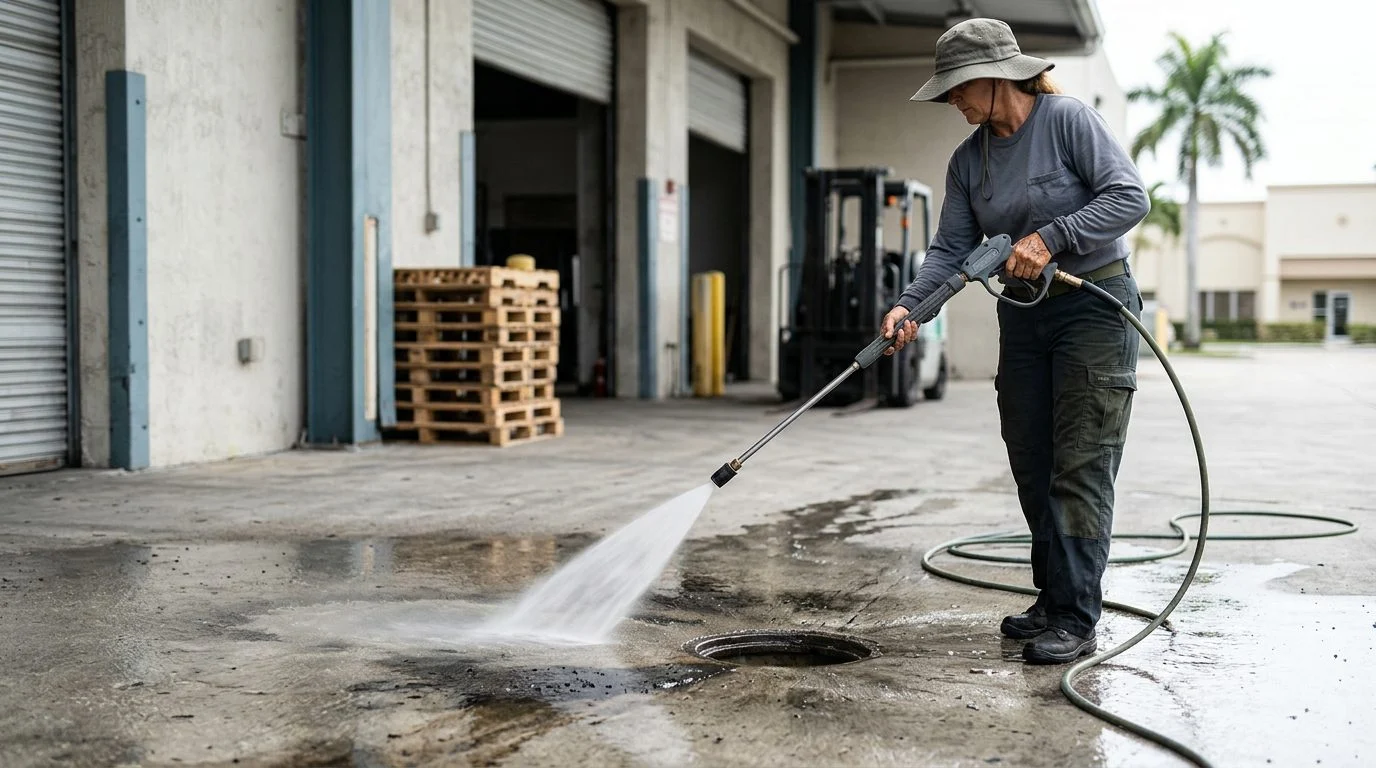
Water from the job does not stay put. The South Florida Water Management District notes that polluted runoff entering storm drains is discharged untreated into connected water bodies. Plan containment and cleanup as part of the job, not as an afterthought.
Electric vs. Gas Pressure Washers at 2000 PSI
A 2000 PSI rating can come on either an electric or a gas machine, and the power source changes how the job runs. Both types can list high PSI with low flow, so check the flow number too.
Electric units are lighter, quieter, and simple to start. They need a reliable outlet or a heavy-duty cord. They suit a single wall, a deck, or a driveway section.
Gas units run without a cord and can hold steady through a longer job. They are heavier and louder, and they need fuel and more upkeep. On a large house, match the machine to the run time and the access you have. If you’re weighing a purchase, remember the rating tells you the pressure, not whether the machine suits the job.
Nozzle Tip, Distance, and Technique
For most house exteriors, a wide fan tip held at a steady distance is the usual starting point. Tip angle controls how much force lands on one spot. A narrow tip concentrates the stream. Even at a modest PSI, it can etch paint, gouge wood, or drive water under siding.
Start wide and farther back. Step closer only if the first pass doesn’t lift the dirt. Rinse off loose debris with a garden hose first, then use the wand to lift grime. This cuts the force you need. Move in long, even strokes, and work from the bottom up so clean water doesn’t streak over dirty areas. Check the wand angle often. A tilted wand changes the contact point and can leave streaks.
The most common mistake is lingering. People hold the wand on one stain until it burns a mark into the surface. Keep moving, and rinse each section before you go on.
Not sure what your next step is?
Talk it through with our team — the first consultation is free, confidential, and carries no obligation.
Pressure Washing a Condo or Multi-Unit Exterior in Miami-Dade
A condo or multi-unit exterior adds height, access, and shared areas that a single-house job does not. Scheduling around residents, parking, and balcony access also shapes the plan.
Balconies and terraces need a different approach than siding. Paver walkways in shared areas, such as those in Coral Gables, need their own pressure and protection.
Timing can also come from local conditions.
Community Associations Institute guidance supports organized maintenance programs and checklists when a board writes vendor scopes of work.
Talk With Our Team About Your House or Building
The PSI number alone rarely settles the question, so start with the surfaces and the building. Whether you’re handling a home yourself, serving on a condo board, or managing a property for someone else, the details shape the plan. Every building is different, and a quick talk can show which surfaces need the most care. Describe the surfaces, the access, the timing, and any stains you’re worried about. Our team also handles floor care maintenance, landscape services, day porter service, and pressure washing across South Florida.
Frequently Asked Questions
Is 2000 PSI enough for vinyl siding?
Often yes, with a wide tip held back from the wall. A narrow stream up close can crack panels or push water behind them.
Can 2000 PSI damage concrete?
Sound concrete can handle it. Cracks and old sealant can worsen under a hard stream.
Is an electric or gas unit better at 2000 PSI?
It depends on the size of the job, your power access, and how long you need to run.
What is the difference between PSI and GPM?
PSI measures force, and GPM measures water volume. Both shape how fast a job cleans.
If you’re facing a house or building decision you didn’t plan for, you don’t have to sort out the surfaces alone. Reach out through the contact form and let’s talk it through. La consulta inicial es gratuita, confidencial y sin compromiso de continuar.
How We Approach Pressure Washing Projects
Surface first
We look at the material, its age, and its condition before choosing how to clean it.
Care around the building
We plan for nearby landscaping, windows, and fixtures so the cleaning stays controlled.
Scheduled around your site
We work with your property's hours and operations to keep disruption low.
Free first consultation
The first consultation is free, confidential, and with no obligation to continue.
Warning: Too Much Pressure Can Cause Damage
A narrow stream held close to the surface can crack panels, etch painted or soft surfaces, or force water behind siding. Do not test a high-pressure setting on a delicate material without guidance.