
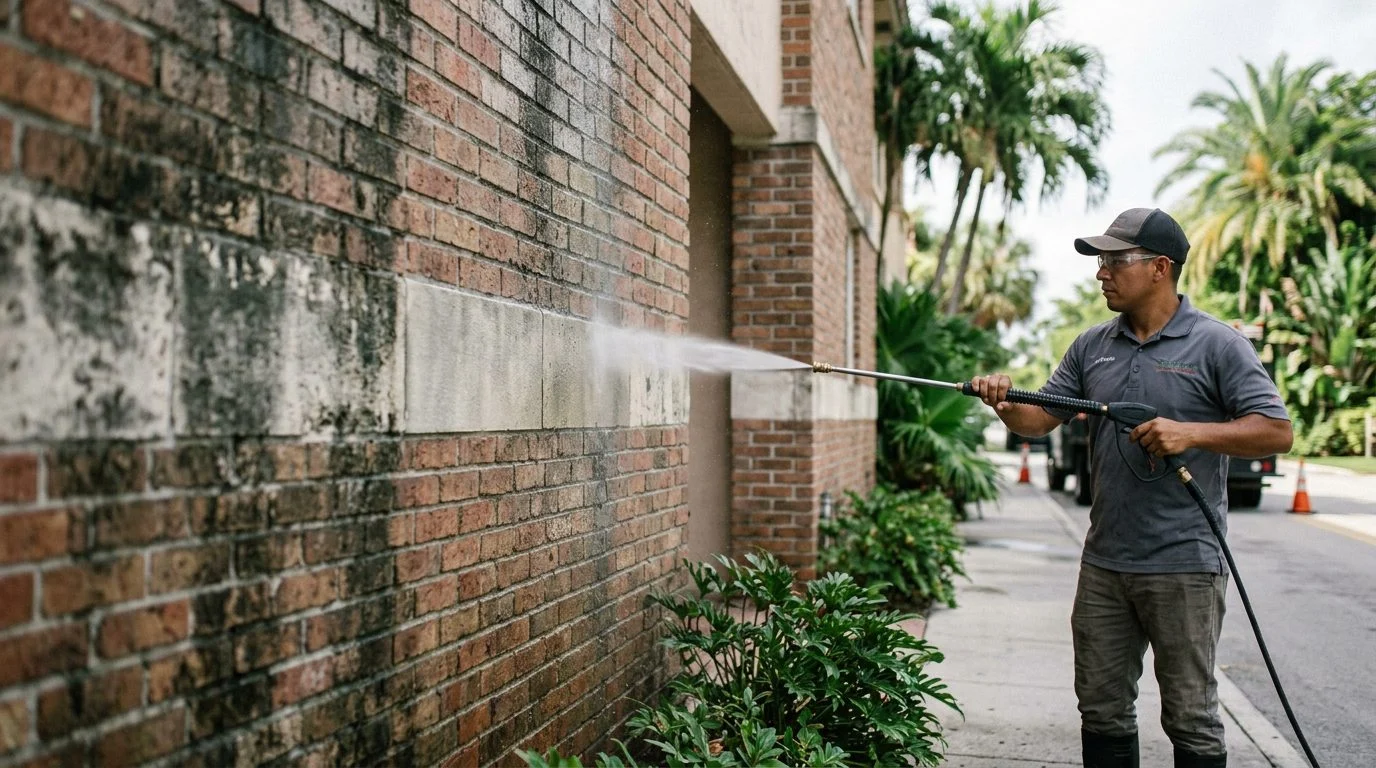
Pressure Washing | South Florida Condos
Pressure Washing Built Around Your Condo Building
Keeping shared exteriors clean takes a plan that fits your property, your residents, and your schedule.
By Ryan Jurney · Published November 15, 2026
If your condo board is responsible for walkways, pool decks, and building exteriors, the questions below cover how those areas are handled. Gator Protection provides pressure washing services for condo common areas across South Florida.
What a Pressure Washing Service Agreement Covers for a Miami-Dade Condo
A pressure washing service agreement is a written arrangement that sets which shared surfaces get cleaned, how often, and on what terms. It is built for condo boards, property managers, and building managers in Miami-Dade County, including Brickell, Coral Gables, and South Beach. The same approach applies in Broward and Palm Beach counties.
Written terms give everyone one set of expectations. Without them, a board may picture a full building wash while the vendor plans a walkway clean. A written agreement closes that gap before the first visit.
Florida law sorts condos by use. A condo that has both commercial and residential units is a Fla. Stat. § 718.103 mixed-use condominium. If your building mixes uses, say so in the scope, so the surfaces and access points match how the building is used.
Pressure washing is one of four services Gator Protection offers. The others are day porter service, floor care maintenance, and landscape services. A board that already uses one of these can cover several common-area needs with one vendor.
If your condo board is responsible for walkways, pool decks, and building exteriors, the questions below cover how those areas are handled. Talk it through with our team — the first consultation is free, confidential, and carries no obligation.
Scope of Work: Which Condo Surfaces Are Included
The scope covers the shared exterior and common-area surfaces the association is responsible for. Typical items include:
- Building walls and facades
- Entry walkways and pedestrian paths
- Pool decks
- Parking garage entrances
- Dumpster enclosure pads
Each material needs its own method. Concrete, stucco, pavers, and painted masonry respond differently to pressure and tools. The agreement should name the surface type and the method for each area, not just a general “building wash.”
Exclusions matter as much as inclusions. List any surface the board wants kept out of the work. Also write down how new areas get added later.
Compare the written scope against what you discussed. Read the final document line by line before signing.
Setting the Service Frequency: Recurring Schedules and One-Time Jobs
Frequency is set in the agreement for each surface or area, using recurring visits, seasonal cycles, or one-time jobs. A single blanket schedule rarely fits a whole property, because areas wear differently.
Common arrangements include:
- Recurring visits on a set calendar
- Seasonal cycles for areas that build up grime at certain times of year
- One-time cleanings before an inspection, a board event, or a turnover
Schedule factors include foot traffic, sun and water exposure, and the condition found during the site review. A busy entrance walkway may need visits more often than a rear dumpster pad.
Board approval can set your timeline. Under Fla. Stat. § 718.112, assessments shall be made against units not less frequently than quarterly, and the manner of collecting them must be stated in the bylaws.
Changes to frequency should be in writing and take effect on an agreed date.
How the Process Works, Step by Step
The process starts with a first consultation and ends with a signed agreement and a set visit calendar. Here is what to expect.
- First consultation. Share the property details, the board’s goals, and the areas of concern.
- On-site review. Measure the areas, identify surface types, note access points, and record existing damage before work starts.
- Written scope and proposal. Review surfaces, frequency, exclusions, and terms with the board.
- Signed agreement. Sign the agreement, set the visit calendar, and agree on one point of contact.
- Scheduled visits. Service runs on the agreed calendar and covers only the defined areas.
- Periodic review. Check that the schedule is meeting the agreement, and change it in writing if needed.
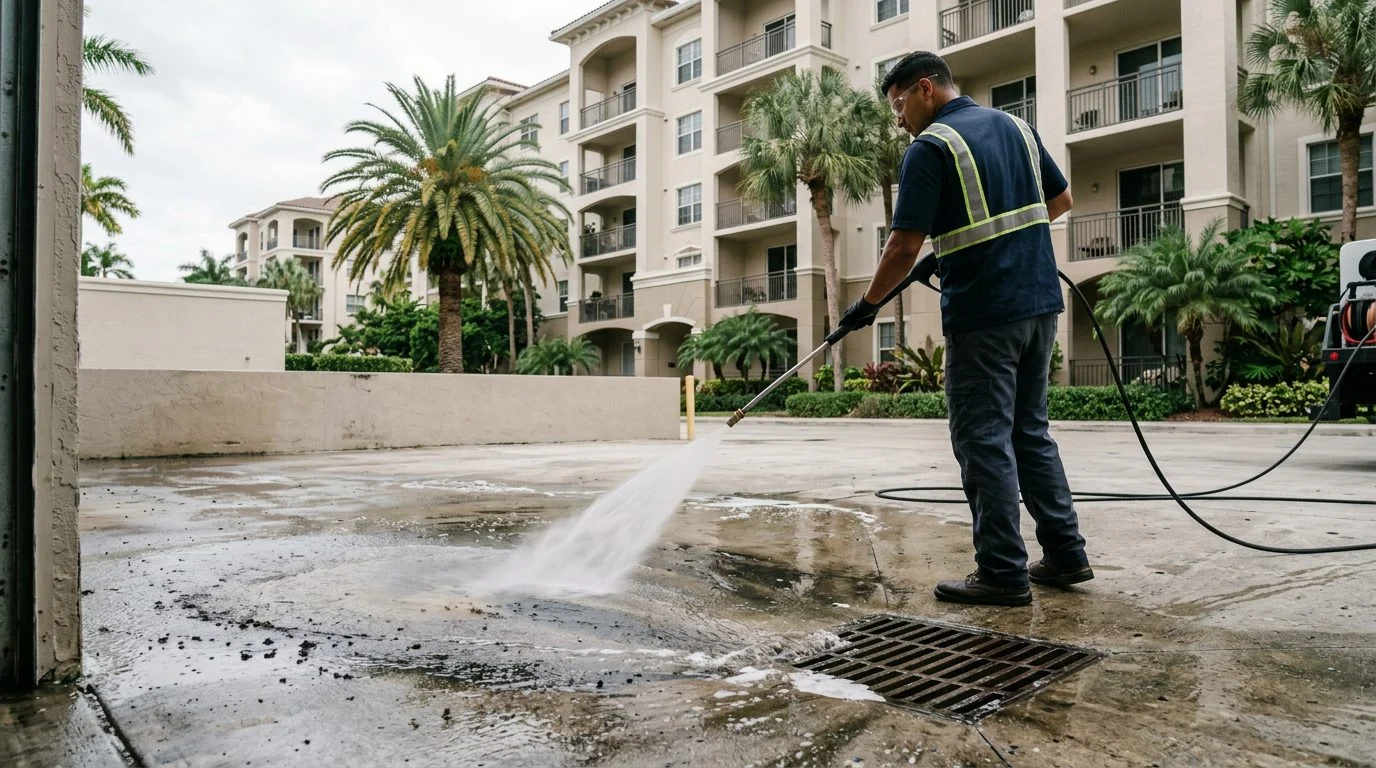
Ask how wash water is handled during the review. The South Florida Water Management District says runoff entering South Florida storm drains is discharged untreated into connected water bodies, and runoff can carry pollutants from paved surfaces, South Florida Water Management District guidance. Walkways and garage entrances are paved, so this question belongs in the first review.
What to Get in Writing After Each Visit
The agreement should define what the board receives after each visit. Clear terms prevent confusion later about what was done and what was not.
Useful items to define include:
- The visit date and the areas completed
- The surfaces treated and the method used
- Issues noticed during the visit, such as cracking or staining that cleaning did not remove
- The delivery method and timing, such as an emailed summary or a board-meeting update
Keep your records organized. Fla. Stat. § 718.111 requires official records to be maintained in an organized manner that facilitates inspection by a unit owner.
Why Gator Protection for Your Condo Agreement
Gator Protection offers pressure washing as part of its commercial service line in South Florida. The business also provides commercial janitorial services and commercial landscape maintenance.
Key points for a condo board:
- Pressure washing sits alongside day porter service, floor care maintenance, and landscape services, so one vendor can cover several common-area needs.
- Coverage includes Miami-Dade County, Broward County, Palm Beach County, South Beach, Coral Gables, and Brickell.
- Support staff, including assistants and office staff, are part of the team.
- The agreement is written so the board can review the scope before any work begins.
This page is written for boards that want the terms on paper, not a general house-washing price list.
Not sure what your next step is?
Talk it through with our team — the first consultation is free, confidential, and carries no obligation.
Frequently Asked Questions About Condo Pressure Washing Agreements
Here are short answers to common questions about condo pressure washing agreements.
Do you serve condos in Miami-Dade County?
Yes. Gator Protection serves Miami-Dade, Broward, and Palm Beach counties, including South Beach, Coral Gables, and Brickell.
What is the difference between pressure washing and power washing?
Both terms describe cleaning with high-pressure water. The agreement should name the method and pressure for each surface.
Can the agreement change after I sign?
Yes. Changes to areas or frequency should be written down and agreed before they take effect.
Who should sign for the condo?
Sign through the person your association has authorized to act for it. Check the association’s documents to confirm who that is.
Is there a fee for the first conversation?
La consulta inicial es gratuita, confidencial y sin compromiso de continuar.
Request a Quote for Your Condo Pressure Washing Agreement
If your board is dealing with dirty walkways, pool decks, or building exteriors and needs a written scope in place, this is the next step. Bring your list of surfaces, the frequency you have in mind, and any problem areas you have noticed. Then fill out the contact form, call the office, or request a quote to set up your first consultation.
How We Approach Condo Pressure Washing
Method and pressure set for each surface
We confirm the cleaning method and pressure for every surface before work begins, so concrete, stucco, painted walls, and railings each get the right treatment.
Scheduled around residents
We plan visits around your community's routines, including entry access, parking, pool use, and common-area hours.
Coordinated with your management
Our team keeps your property manager or board informed about timing, work zones, and any areas that need attention.
Serving South Florida condos
We work with condo communities across Miami-Dade, Broward, and Palm Beach counties, including South Beach, Coral Gables, and Brickell.
Ask for a Surface-by-Surface Plan
High pressure can damage stucco, painted finishes, and sealed or aging concrete. Before any work starts, ask that the method and pressure for each surface be written into your service plan.
Common Condo Areas We Clean
Building Exteriors
Facades, stucco, and painted walls that collect dirt, mildew, and road grime over time.
Walkways and Pool Decks
Entry paths, pool surrounds, and stairways that need regular cleaning for safe footing and a clean look.
Parking Areas and Garages
Driveways, ramps, and garage floors where oil, tire marks, and debris build up.
Balconies and Railings
Balcony surfaces, railings, and fixtures that show residents and visitors the building's condition first.