
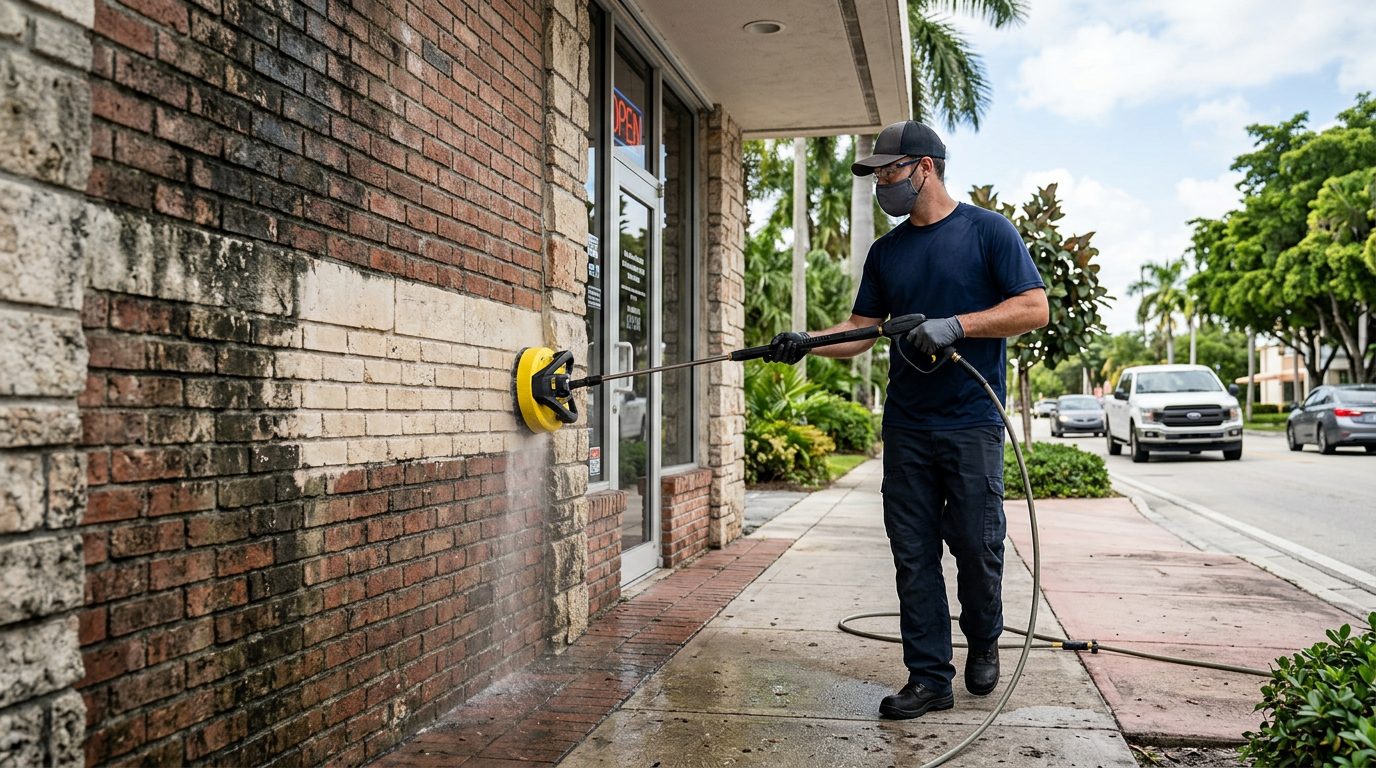
Pressure Washing | South Florida
Pressure Washing or Power Washing? Know the Difference Before You Book
Commercial properties from Brickell to Palm Beach need clean exteriors, and the right method depends on the surface and the job.
By Ryan Jurney · Published November 15, 2026
You’re reviewing a proposal for exterior cleaning, and two terms keep showing up: pressure washing and power washing. You want to know if they describe different work.
Usually, they describe nearly the same service. The one difference most often cited is water temperature. The written scope tells you more than either label.
Are Pressure Washing and Power Washing Different?
Mostly, no. Pressure washing and power washing both use a machine that pushes water out at high pressure. The goal is to remove dirt, mildew, grime, and loose residue from hard surfaces.
The main technical difference is heat. Power washing generally means the unit heats the water. Pressure washing generally means the water is unheated, or cold.
In everyday use, many providers and customers treat the two terms as the same. That means a label on a bid can mislead you. One proposal that says “pressure wash” and another that says “power wash” may describe the same work, or different work. Read what the crew will do, on which surfaces, and with which method.
If a board vote or a stained façade is weighing on you, our team can review your property's surfaces and scope with you. Talk it through with our team — the first consultation is free, confidential, and carries no obligation.
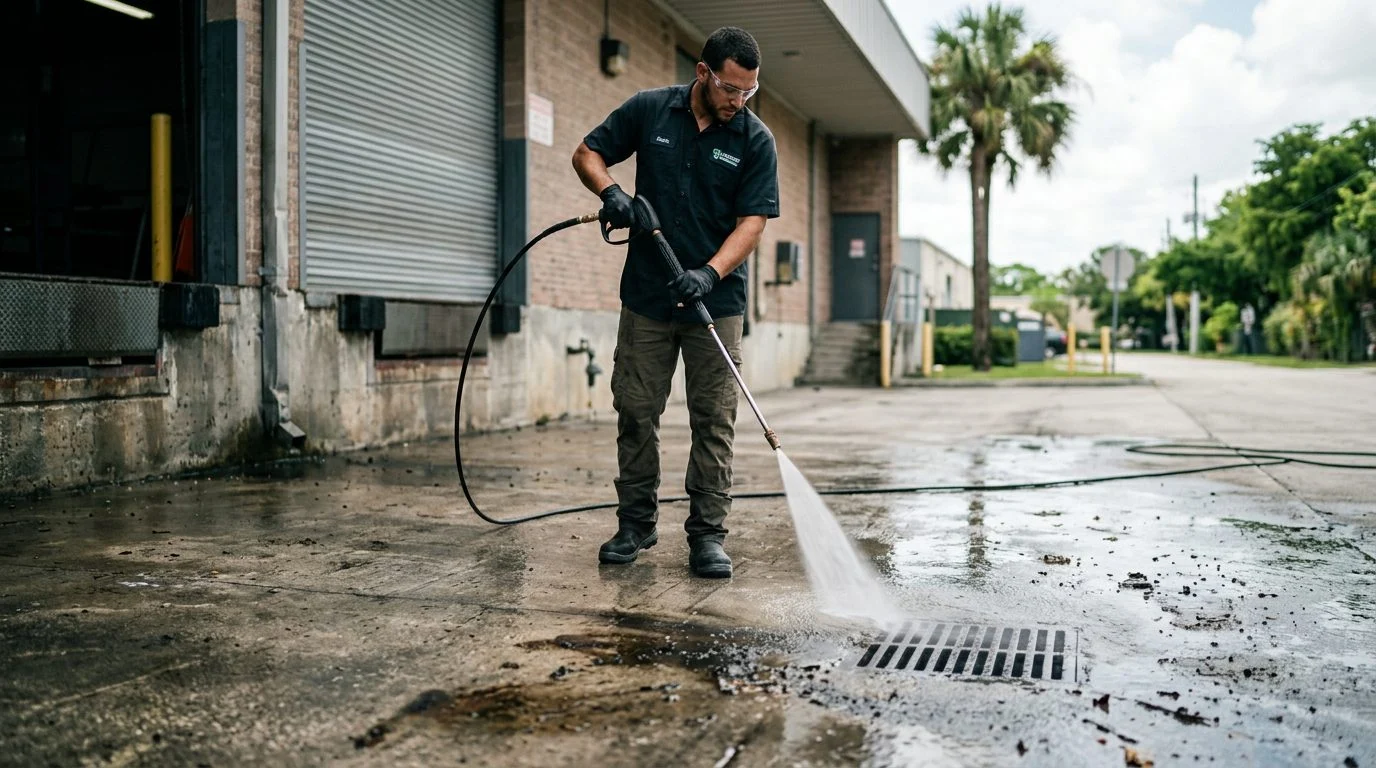
What Pressure Washing Means
Pressure washing forces water through a nozzle at high pressure to knock dirt and grime off a surface. Two measurements describe the machine. PSI (pounds per square inch) measures pressure. GPM (gallons per minute) measures how much water flows.
Pressure and flow work together. They decide how much cleaning force reaches the surface and how fast a large area gets covered.
Cold-water pressure washing is the common approach for general exterior grime. It suits sidewalks, driveways, walls, and parking areas. Much of its cleaning power comes from the force of the water itself.
Distance and nozzle angle matter too. A closer wand or a narrow spray puts more force on one spot. A wider pattern from farther away is gentler. The same machine can clean gently or hard, depending on how it is set up and held.
What Power Washing Adds: Heated Water
Power washing adds heat. The unit warms the water before it leaves the wand. Warm water helps loosen oily and greasy residue that cold water can leave behind.
On commercial properties, common targets include parking garage grime, dumpster pads, and grease staining near service areas.
Heat does not replace good technique. The surface, the pressure setting, and the cleaning product still shape the result. Hot water on a sensitive finish can still cause damage if the setup is wrong. Hotter is not automatically better.
When a proposal says power washing, ask whether heated water is part of the scope and the price. Get that answer in writing.
Where Soft Washing and Cleaning Solutions Fit
Soft washing is a low-pressure method. It applies detergent or cleaning solution, lets it sit on the surface, and then rinses it off gently. It uses low pressure with a high volume of water.
Painted siding, stucco, and roofing are common soft-wash surfaces. A hard spray can chip, etch, or strip their finish. Soft washing trades force for dwell time, so the solution does the loosening work.
People often ask whether you can use soap in a power washer. Yes, detergents are used in these systems. They are typically applied through a low-pressure tip or siphon, then rinsed off.
Cleaning chemicals on any exterior job need careful handling. Ask how chemicals are labeled and stored on site.
Is Pressure Washing Hard, and When Should You Skip It?
Yes, safe pressure washing takes training. The stream can cut skin, and the wand kicks back when triggered. A narrow tip or a wand held too close can etch concrete or strip paint.
High pressure often harms peeling or failing paint, stucco, wood siding, window seals, older mortar joints, and roof shingles. Protect or avoid electrical fixtures, outlets, light fittings, and vents during any exterior wash.
A test patch is a sensible first step. Try a hidden or low-visibility area to see how the surface responds before the full job starts.
Wet work also creates slip risk. Plan for runoff and drying time on walkways, and keep floor care in mind after exterior work.
Choosing the Right Method for a South Florida Property
The right method depends on the surface, the type of soil, the building’s age and finish, and how the area gets used. A good proposal answers those questions in writing.
South Florida conditions shape that choice. Humidity encourages mildew on shaded walls. Salt air can leave residue on exterior surfaces. Entrances and pool decks see heavy foot traffic, which turns into grime and slip risk quickly.
Pricing usually reflects surface area, method, access, and how often the work happens. A low number may cover a smaller scope. A common mistake is approving a bid that says only “power wash,” with no surface list. Read the scope line by line, not just the label.
Our exterior cleaning work covers South Florida, including Miami-Dade, Broward, and Palm Beach counties.
Not sure what your next step is?
Talk it through with our team — the first consultation is free, confidential, and carries no obligation.
Talk Through Your Property With Our Team
Maybe you’re a condo board member reading a proposal before a vote. Maybe you manage a building with a stained façade or a slippery walkway. Or maybe you own an older home and aren’t sure what its exterior can take.
The decision in front of you is specific. Can the surface handle high pressure? Do greasy areas need heated water? Would soft washing protect the paint and stucco better?
Our team can review those surfaces and the scope for your property. Reach out through the contact form, call the office, or request a free quote.
La consulta inicial es gratuita, confidencial y sin compromiso de continuar.

Frequently Asked Questions
Is power washing the same thing as pressure washing?
Often, yes. Many companies use the two terms interchangeably, and both describe cleaning surfaces with a high-pressure stream of water.
Does power washing use hot water?
Sometimes. Some providers use heated water with pressure washing, which can help loosen grease and oil, while others use unheated water. Our team can explain which method fits your property during a free first consultation.
What surfaces are commonly pressure washed?
Pressure washing is commonly used on driveways, sidewalks, patios, building exteriors, and parking areas. The right pressure and method depend on the surface material, so each job is assessed before work begins.
How can I find out which cleaning method my property needs?
Contact Gator Protection, Inc. Our free first consultation is confidential and comes with no obligation to continue.
Why Commercial Properties Choose Gator Protection
Surface-Aware Cleaning
We look at the material, the soil, and the traffic before choosing how to clean, so surfaces are treated with care.
One Team, Many Services
Our team also handles day porter service, floor care maintenance, and landscape services for the same property.
Built for South Florida
We focus on commercial sites across Miami-Dade, Broward, and Palm Beach counties, including South Beach, Coral Gables, and Brickell.
Clear Communication
We explain the cleaning method, the scope of work, and the schedule before any work begins.
Ask About the Method Before You Approve the Job
Pressure washing and power washing are often used interchangeably, so confirm which method, water temperature, and cleaning solution a provider plans to use for your surfaces.
What to Discuss Before Scheduling
Type of Surface
Concrete, brick, stucco, and wood each respond differently to pressure and heat. Tell us what you need cleaned.
Type of Soil
Dirt, mildew, grease, and oil call for different approaches. Describe the stains or buildup you see.
Site Access and Timing
Business hours, foot traffic, and nearby landscaping all affect how and when the work is scheduled.
Coordination With Other Services
Pressure washing often pairs well with floor care and landscape maintenance on the same visit schedule.