
Pressure Washing | Miami-Dade County
What Really Sets Pressure Washing Costs for Miami-Dade Condos
A practical guide to the property details that shape your price, and how to get a quote built around your building.
By Ryan Jurney · Published November 15, 2026
If you manage a condo or association, you probably want one number for the budget. There isn’t one.
The price is built from measurable inputs: how much surface gets cleaned, what it’s made of, how dirty it is, how hard it is to reach, and how long the crew stays. When you are comparing quotes, read what each one includes rather than focusing on a single number.
Why There Is No Single Average Price for Pressure Washing
A single average price can mislead a budget because two jobs with the same name can need very different amounts of work. A small walkway and a twelve-story exterior both count as pressure washing. Their crew hours, equipment, and cleanup are not the same, so their prices aren’t either.
Two properties on the same street can cost very different amounts. One may have light dust on a painted wall. The other may have algae on a stucco wall and oil on the parking area. The first needs a routine pass. The second needs pre-treatment, more rinsing, and more time on site.
Think of an average as a starting point for questions, not a figure to approve. Ask what the number covers. Estimates should start with a clear list of areas, because any number without that list is a guess. This page explains the inputs behind a price and the common pricing structures.
If your board is weighing exterior cleaning for the building this year, our team is glad to talk through the property with you, so you can reach out using our contact form. Talk it through with our team — the first consultation is free, confidential, and carries no obligation.
What Drives the Cost of a Pressure Washing Job
Five inputs drive most of the cost: surface area, surface type, soil condition, height and access, and job duration. Each one changes how much crew time the job needs. Crew time is usually the largest part of the price.
Surface area is the total square footage of what gets cleaned. That includes building walls, walkways, pool decks, parking areas, and driveways. More area means more time, more water, and more rinsing. Ask for each area on its own line so you can see where the square footage comes from.
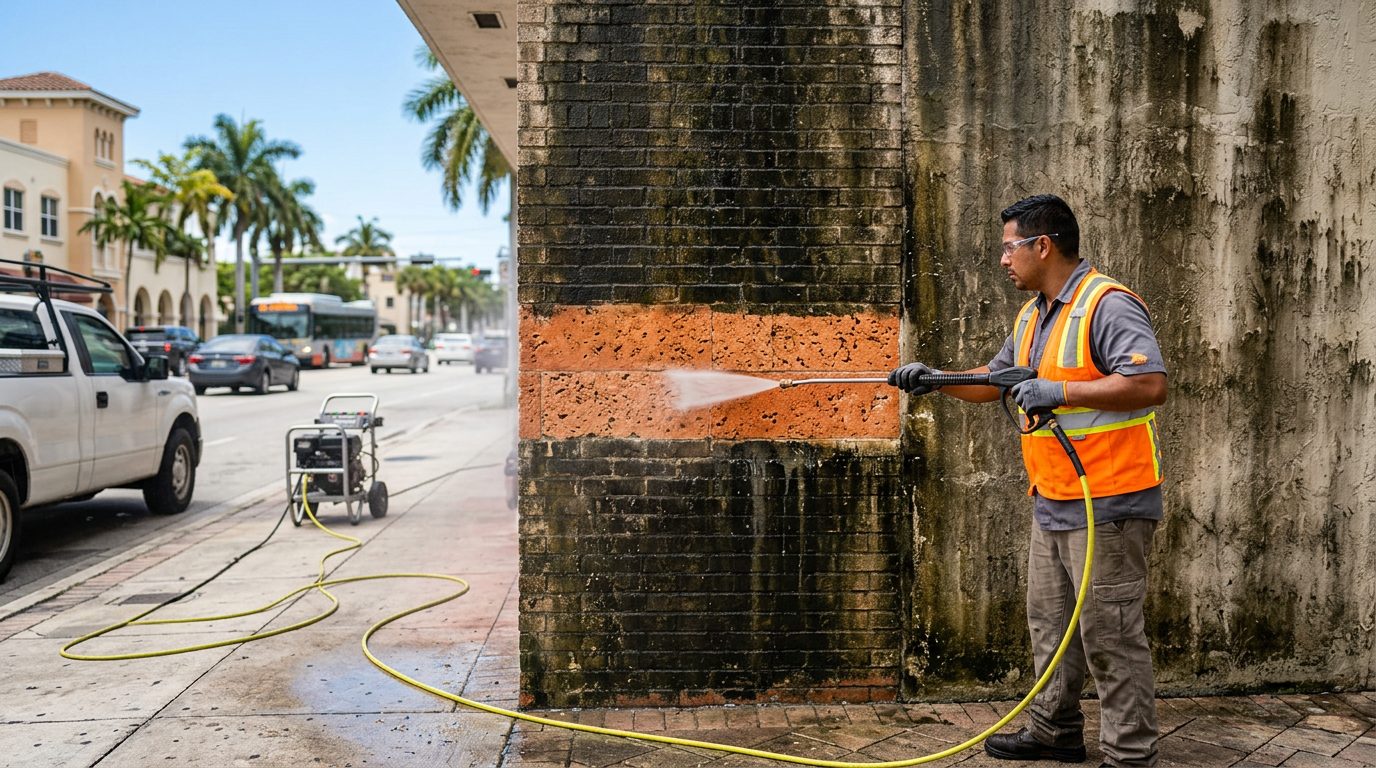
Surface type matters because concrete, stucco, pavers, and painted surfaces react differently to water. A crew adjusts the pressure and method for each one. A surface that can be damaged by too much pressure takes more care, and care takes time.
Soil and condition change the work too. Light dirt rinses off quickly. Mildew, algae, grease, and oil usually need pre-treatment, dwell time, and a second rinse. That adds labor even when the square footage stays the same.
Height and access affect equipment and labor. Multi-story exteriors, rooftop edges, and tight courtyards can need ladders, lifts, or extra setup time. Ask how the quote handles those areas.
Job duration ties it all together. The total crew hours are what the final number reflects. For a full guide to the service and the conditions it fits, read our Miami-Dade condo pressure washing guide.
How Pressure Washing Jobs Are Typically Priced
Most quotes use one of three structures: a per-square-foot rate, a flat rate for a defined scope, or a per-visit price on a recurring schedule. Each one shows the number a different way. Contact our team to review the scope of work for your property.
Per-square-foot pricing measures each surface type and multiplies the area by a rate. It helps you see which surfaces drive the total on your property.
Flat-rate pricing sets one price for a listed scope. It works best when the scope is written out clearly, with the areas named and the exclusions stated. If an area isn’t on the list, it isn’t in the price.
Per-visit pricing under a recurring schedule charges one price for each visit on an agreed frequency. It suits properties that need ongoing upkeep, such as a building cleaned on the same cycle every year.
One-time jobs and recurring plans need different reading. A one-time quote covers one pass. A recurring number should be read against the full schedule, including how many visits it covers. Our recurring agreement for condos page explains what those agreements typically cover.
What Shapes Your Service Price
A price is easier to understand when the scope of work is clearly defined. Price alone doesn’t show that. Check the scope of work first, then contact our team to walk through it for your property.
A written estimate should list the areas included, the surface types, the cleaning method, how cleanup and runoff are handled, the timing, and what is excluded. If one of those is missing, the number may not reflect the full job.
Runoff deserves its own line. Runoff can carry pollutants from paved surfaces. An estimate that states how wash water is handled gives you clear, specific information about the work.
The price can reflect the scope of work, including how much pre-treatment, labor, or scheduling is involved. Neither one is right or wrong until the scopes match.
Ask for a line-item breakdown. Each area, method, and service should show its own price. Your board can then review the estimate and decide which scope fits the building.
What Changes the Number for Condo and Association Properties
Condo and association work adds coordination, and coordination affects timing. Common areas, occupied spaces, and resident notice can all shape when the crew can work. The schedule, in turn, drives the crew hours.
Common areas and building exteriors often mean more total surface area than a single unit. Scheduling windows may limit work to certain hours. Residents may need notice before equipment or cleaning products are used near their spaces.
Cleaning chemicals add a safety step. Safe handling of cleaning chemicals depends on clear labels, easy access to safety information, and staff who are trained on chemical hazards. Contact our team to ask how we handle these items on your property.
For regional context, see our South Florida service area page. If you’re still sorting out which service fits the property, read pressure washing versus power washing first.
Talking Through Your Property’s Pressure Washing Budget
Before you contact us, gather the basic details about your property. Collect approximate square footage, surface types, problem areas, access limits, and whether you want one job or a recurring plan.
Many people researching this are not the ones who sign. A board or owner group may approve the budget, and the person gathering numbers may be a manager or volunteer. A clearly defined scope gives the group a basis for its decision.
Write down the questions your board wants answered, such as which areas are included and how runoff is handled. Those notes will make the next conversation shorter and clearer.
La consulta inicial es gratuita, confidencial y sin compromiso de continuar.
If your board is weighing exterior cleaning for the building this year, our team is glad to talk through the property with you, so you can reach out using our contact form.
Not sure what your next step is?
Talk it through with our team — the first consultation is free, confidential, and carries no obligation.
Frequently Asked Questions
What is the average price for a pressure washing job?
There is no single average price because costs depend on the size of the area, the surface, and how dirty it is. To get an accurate figure for your property, contact our team for a quote; the initial consultation is free, confidential, and carries no obligation to continue.
What factors affect the cost of pressure washing in South Florida?
The main factors are the total area to be cleaned, the surface type (such as concrete, pavers, or stucco), the level of buildup like mold, algae, or oil stains, and how easily crews can access the work area. Our team reviews these details during your consultation so the quote reflects your property.
Do pressure washing companies price by the square foot or by the job?
Pricing is often based on the area being cleaned or on the overall scope of the work, and the right approach depends on your project. We will explain how we price your job and confirm the cleaning method before any work begins.
Can recurring pressure washing cost less per visit than a one-time cleaning?
A recurring schedule may change the cost per visit because it helps keep surfaces from building up heavily between cleanings. Our team can outline one-time and recurring options during your free, confidential consultation, with no obligation to continue.
What We Look at Before Quoting
Property Size and Layout
Building footprint, number of stories, and the total area that needs cleaning all influence the scope of work.
Surface Type
Stucco, concrete, pavers, metal, and glass each call for different equipment and techniques.
Access and Scheduling
Parking, water access, and when the work can take place around residents affect how the job is planned.
Level of Buildup
Mildew, algae, grime, and staining vary widely, and heavier buildup usually requires more time and care.
A General Estimate Is Not a Final Price
Every condo property is different. Share your building's details with our team and we will discuss what your project involves. The initial consultation is free, confidential, and carries no obligation to continue.
How to Prepare for Your Quote
Gather Property Details
Have the approximate building dimensions, number of units, and the surfaces you want cleaned ready to share.
Note Problem Areas
Photos of stains, mildew, or buildup help our team understand the condition of the property before quoting.
Plan Around Residents
Let us know about parking limits, pool areas, walkways, and any hours when work should be avoided.
Request a Written Quote
A written quote lays out the scope of work so your board or management team can review it with confidence.