
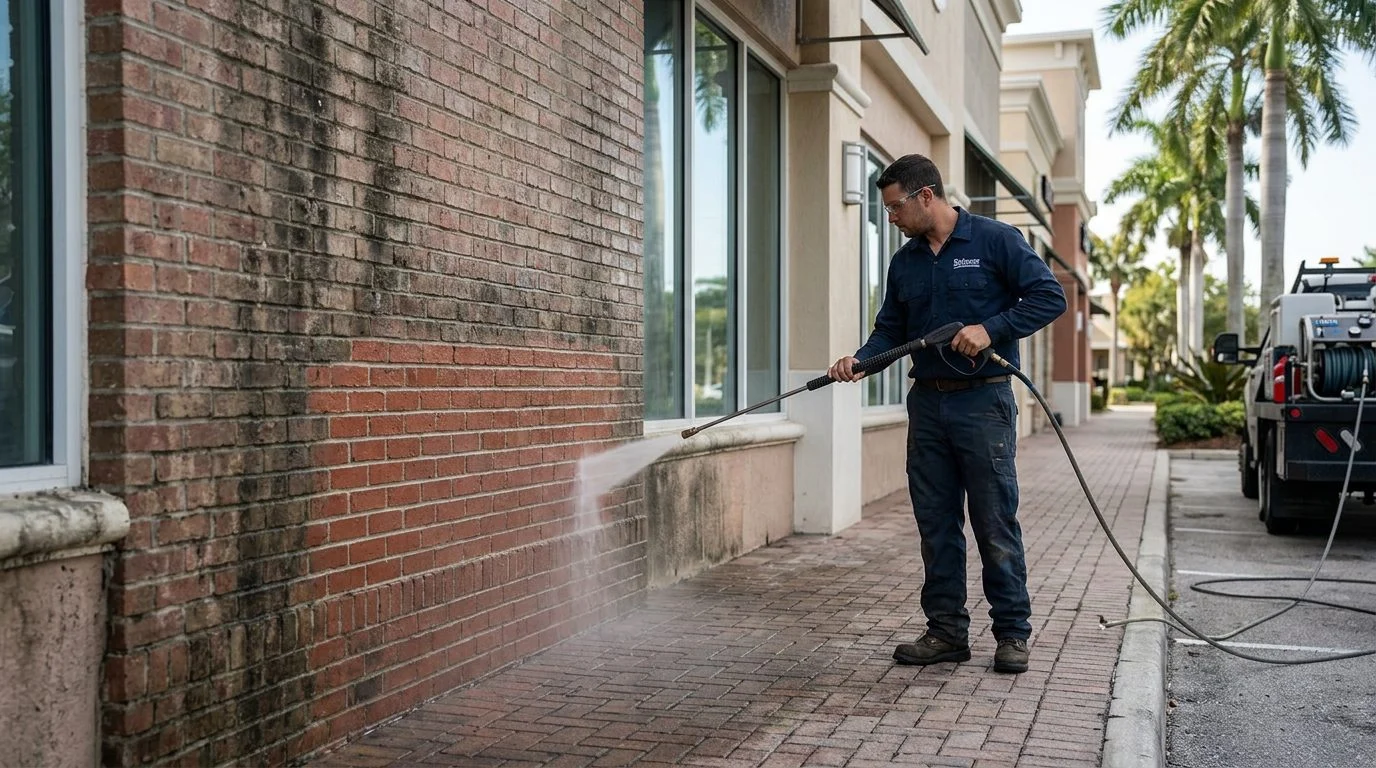
Pressure Washing | Palm Beach County
Keep Your Plaza Walkways Clean, Safe, and Welcoming
Walkway washing is a planning decision as much as a cleaning one. Here is how property managers in Palm Beach County can build a schedule around their tenants, their traffic, and their surfaces.
By Ryan Jurney · Published November 24, 2026
If you manage a shopping plaza in Palm Beach County, you’ve probably asked how often its walkways should be pressure washed. For most plazas, the planning range runs from about twice a year to monthly, with busy entrances needing the most frequent cycles. These ranges are starting points, not fixed rules. This guide explains what moves them up or down.
How Often Shopping Plaza Walkways Need Pressure Washing
Most plaza walkways fall somewhere between twice a year and monthly, based mainly on how many people walk over them. As a planning starting point, busy entrances and dining-area walkways often run on a monthly cycle. Storefront frontage with moderate traffic often fits a quarterly cycle. Low-traffic rear and service walkways often need pressure washing about twice a year.
Walkways usually show grime before the buildings do. Shoppers, grocery carts, and delivery dollies carry dirt across them every day. Standing water sits in low spots and leaves dark films behind. Dining areas add grease and drink spills that dry into the surface. Palm Beach County’s heat and rain speed this up, so a schedule that works in winter may need tightening in the wet season.
A plan that matches your actual traffic works better than a calendar copied from another property. Use these ranges as a place to start, then adjust them after you look at your own plaza.
If grime or slick spots are building up on your plaza walkways, request a quote and we'll set up a walk-through to plan the cleaning schedule with you. Talk it through with our team — the first consultation is free, confidential, and carries no obligation.
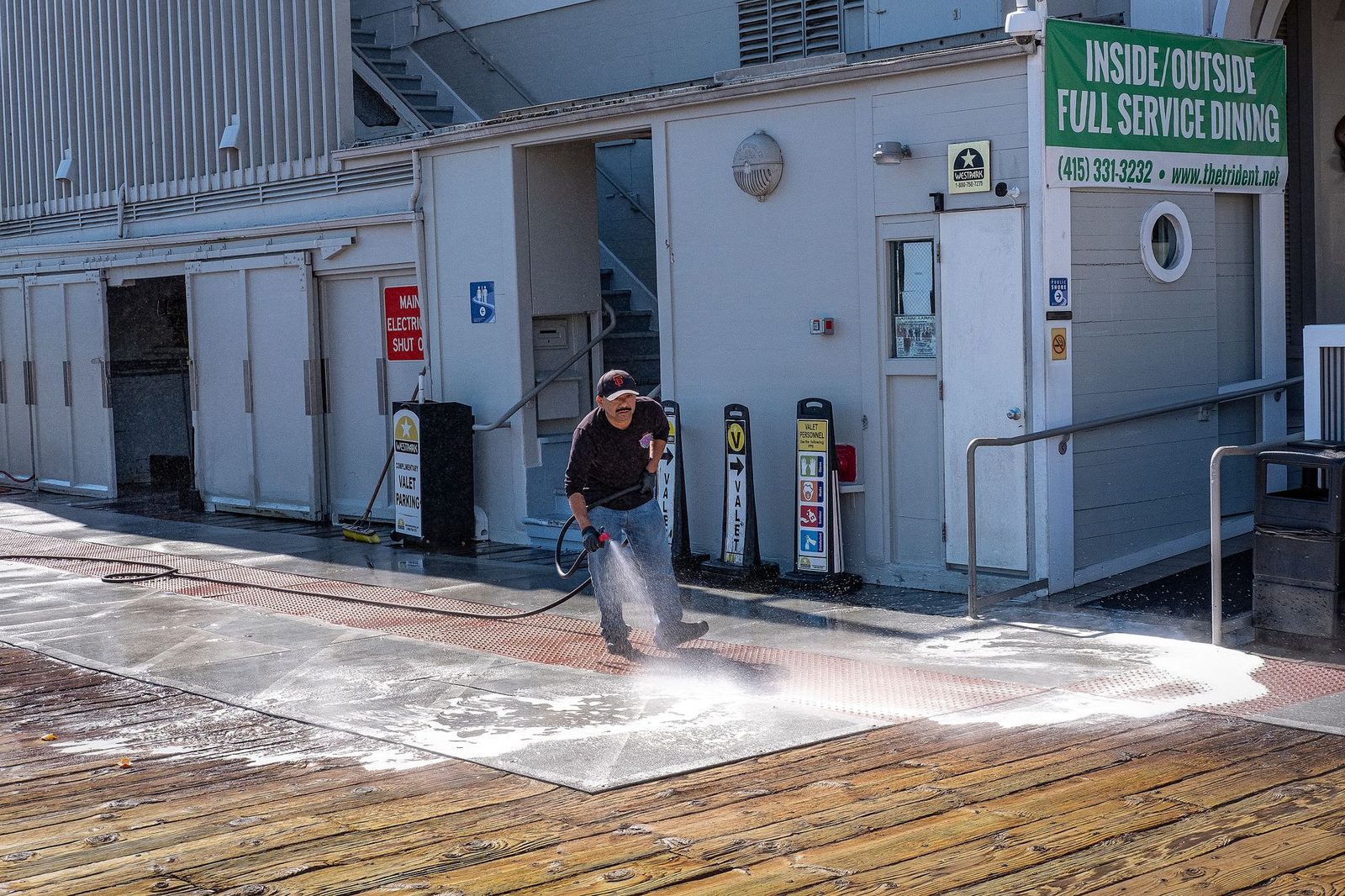
How Surface Type Changes the Cleaning Schedule
Surface type changes how a walkway gets cleaned and how closely it needs checking. Each material holds grime in its own way.
Concrete walkways hold dirt and organic staining in their pores and joints. They usually follow the traffic-based cycle above, with extra attention to the joints where dirt collects.
Pavers and interlocking stone trap joint sand, algae, and dirt between the units. Check the joints as well as the top surface. Grime left between units tends to come back quickly.
Stamped or decorative concrete has detail areas where grime settles. Gentler pressure settings and more frequent visual checks help protect the finish.
Sealed or painted surfaces need a check first. Confirm the sealer or coating type before scheduling. Pressure and nozzle choice can affect its condition. Our team confirms the surface type during the walk-through, before any cleaning begins.
What Moves a Walkway Up or Down the Schedule
Traffic, food, shade, weather, and debris are the main factors that shorten or lengthen the cleaning interval.
Heavy foot traffic and cart use shorten the cycle. A walkway that carries grocery carts and delivery traffic all day gets dirty faster than a quiet back path.
Food and dining areas call for a closer cycle. Grease, drink spills, and trash residue near restaurant frontage get tracked across the plaza by customers.
Shade and moisture speed up growth. Shaded walkways near irrigation lines, mulch, and planting beds develop algae and mildew faster than sunny sections do.
Florida’s wet months add buildup quickly. Many properties adjust the schedule for the rainy season and ease off when the dry months return.
Landscaping adds debris. Leaves, palm fronds, and sand blown in from nearby beds add to the workload between cycles. Tidy beds mean fewer visits to clear the walkways.
How the Schedule Is Set at a Walk-Through
A walk-through sets the schedule by showing the actual plaza before any frequency is recommended.
Our team walks the property with the manager. The crew reviews the surface materials, the areas of heaviest use, and any drainage or standing-water spots. They also note staining and slip concerns. A walk-through shows how people really move across the plaza, which a generic calendar cannot show.
The findings become a written cleaning cycle. It lists each area, the frequency, and the preferred service windows around store hours. That way, cleaning doesn’t disrupt shoppers.
Wash water is part of the plan too.
Revisit the schedule after a season change or a tenant change. Both often shift traffic and buildup.
Coordinating Walkway Cleaning With Landlords and Tenants
Plaza walkways are usually shared areas, so the owner or manager and the tenants need to agree on who cleans what and when.
Shared walkways don’t always have a clear owner for cleaning. A tenant may assume the landlord handles the frontage, while the manager assumes the tenant does. That gap leaves stains in place.
Write the agreed schedule down. List the areas, the frequency, and the service windows. Share it with each tenant so everyone has the same expectations.
Review the written schedule when a lease changes, a tenant moves out, or a new food business opens nearby. Those changes often shift traffic and grime. Cost responsibility depends on each lease, so check the lease terms before you book work.
Keep one copy in the property manager’s files and send updates whenever the plan changes.
Signs a Walkway Needs Cleaning Sooner Than Scheduled
Watch for staining, growth, pooling water, and residue that customers track across the plaza. Any of these means the next visit should move up.
Dark streaking or green and black growth in joints and along shaded edges is a clear sign. These marks build up over time, so they often show a cycle that has stretched too long.
Water that pools on the surface after rain can make walkways slippery. Standing water can also point to a drainage problem worth noting at the walk-through.
Gum, grease, or food residue near entrances and seating areas calls for an earlier visit. These are the spots where shoppers carry dirt across the plaza.
Faded, dirty-looking frontage makes a plaza look neglected to shoppers and visitors. Cleaning the frontage can make the whole center look better from the parking lot.
Point out these signs at the walk-through so the crew can build them into the schedule.
Not sure what your next step is?
Talk it through with our team — the first consultation is free, confidential, and carries no obligation.

Request a Quote for Your Palm Beach County Plaza
A walk-through is how a cleaning schedule for a specific plaza gets set. Our team serves Palm Beach County. Pressure washing works alongside day porter service, floor care maintenance, and landscape services, so one contact can cover the walkways, interior floors, and grounds of the same plaza.
La consulta inicial es gratuita, confidencial y sin compromiso de continuar. (The initial consultation is free, confidential, and carries no obligation to continue.)
How often should a shopping plaza be pressure washed in Palm Beach County?
Many plazas plan from twice a year to monthly, based on traffic and surface type. A walk-through sets the schedule for your property.
Can wash water go into storm drains?
Florida pressure-washing guidance calls for keeping it out of the environment.
What happens at a walk-through?
Our team reviews surfaces, heavy-use areas, drainage, and staining. Then it writes a cleaning cycle with service windows.
If grime, staining, or slick spots are building up on your plaza’s walkways, contact us to request a quote. We’ll set up a walk-through and plan the schedule with you.
How Gator Protection Approaches Plaza Walkway Washing
On-Site Walk-Through
We look at your plaza in person to note foot traffic, surface types, and problem areas before recommending a schedule.
Scheduling Around Your Tenants
Washing times can be planned to limit disruption to customers, deliveries, and business hours.
Care for Your Surfaces
Pressure settings and methods are chosen to suit the material underfoot, so the walkway is cleaned without unnecessary wear.
Coordinated Service
Our team can fit walkway washing alongside the day porter, floor care, and landscape services your property already uses.
What Shapes Your Washing Schedule
Foot Traffic
Busy entrances and sidewalks collect grime faster and may need more frequent attention than quieter areas.
Surface Type
Concrete, pavers, and sealed surfaces each respond differently to washing and wear over time.
Seasonal Conditions
Rain, humidity, and the growth of mold or algae can change how quickly walkways need attention.
Stains and Buildup
Oil drips, food spills, and tire marks near parking areas often call for targeted treatment between full washes.
Keep Wash Water Out of Storm Drains
Pressure-washing wastewater can carry dirt, oil, and cleaning products into the environment. Ask us how wash water is contained and cleaned up before work begins.