
Pressure Washing | South Florida
Know what a pressure washing price should cover
Surface, soil, access, and time each shape the number on a quote. Here is how those pieces fit together.
By Ryan Jurney · Published November 23, 2026
If someone has asked you to approve a pressure washing budget, you probably want to know whether the number in front of you makes sense. A fair price is not one set number. It is a price that matches a written scope of work: the surfaces, the area, the soil, the access, and the crew time the job needs.
This guide explains how those pieces become a total, so you can read a quote with confidence. Our pressure washing services cover the work described here.
Understanding Pressure Washing Costs
A pressure washing price is built from measurable inputs, not a single average that fits every property. Three things drive most of the cost: the surface, the area to be covered, and how dirty that surface is. Each one changes how much labor and equipment the job needs. A heavily stained driveway takes longer than a lightly dirty one of the same size, even though the square footage is identical.
Two properties with similar-sized areas can still be priced very differently. One may have concrete that rinses clean in a single pass. The other may have pavers with old oil stains, a second-story wall, and no nearby water source. The scope is different, so the price is different.
That is why a fair price is one that matches the scope written down. If a quote cannot show what it covers, it’s hard to judge whether the number is fair. Contact our team to review the details of your property and the services it needs.

How Pressure Washing Is Usually Priced
Most quotes use one of three methods: price per square foot, a flat rate for a defined job, or hourly crew time for larger or irregular work. Price per square foot measures the cleaned area and multiplies it by a rate that reflects the surface. It works well for large, open areas like parking lots and building walls, where the surface is consistent.
A flat rate covers one clearly bounded job, such as a single driveway or one walkway. It suits small areas because the boundaries are easy to see and agree on before work starts.
Hourly or crew-time pricing fits large, uneven, or multi-zone projects. The estimate should state the expected hours, the crew size, and what each zone includes. Mixing methods is common on larger properties, such as a flat rate for a driveway plus square-foot pricing for building walls.
Whichever method is used, the quote should say so. That lets you see how the total was reached and check it against the work described.
Factors That Move the Price Up or Down
Surface type, total area, staining, height, access, and cleanup needs push the price up or down the most. Surface type comes first. Concrete, pavers, stucco, painted masonry, and wood each need a different pressure, cleaning product, and level of care. Stucco and painted walls can’t be treated the same way as bare concrete.
Soil matters just as much. Heavy grease, mildew, oxidation, and old stains take more passes and sometimes added treatment. A surface cleaned on a regular schedule usually takes less time than one left alone for years.
Height and access add setup time. Second-story work needs a lift or ladder, and tight courtyards slow down equipment movement. Water and power access matter too, because the crew needs a usable source to connect to.
Cleanup adds labor. Nearby plants, vehicles, and finishes need protection. For general background on local water protection, see the South Florida Water Management District. Careful wash-water control takes time, and that belongs in the scope.
Typical Pricing by Surface and Type of Property
Driveways and parking areas are usually priced by size, with extra time added for oil spots and heavy staining. Walkways, patios, and pool decks are priced by area too. They have more edges, corners, and small transitions, and that detail adds time even when the square footage is modest.
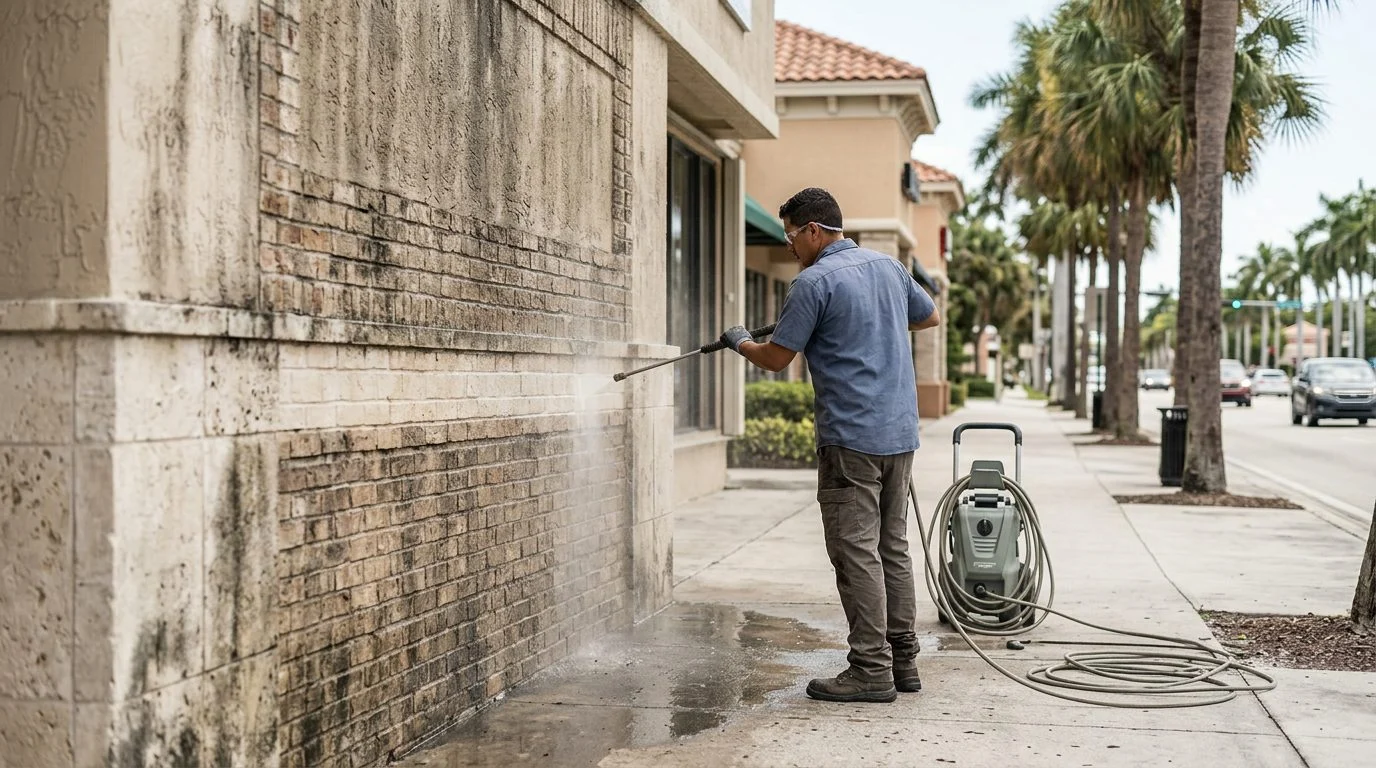
Building exteriors are a different job. Height, surface sensitivity, and cleaning method drive the scope. A stucco wall may need a gentler approach than a concrete slab, and upper stories need lifts or ladders.
Comparing a driveway quote to a building exterior quote on a per-square-foot basis only makes sense when the surfaces and access conditions are alike. Otherwise the math compares two different jobs. Separate line items make it easier to see which part of the price comes from height and which from staining.
Condo and Multi-Unit Pressure Washing Considerations
For condos and multi-unit buildings, the scope usually covers several areas at once, including common walkways, garages, facades, and entry paths. Scoping them together changes crew time and equipment. A crew may need to work in phases so residents can still reach their units and parking.
Property managers and boards should also plan the schedule. Confirm access windows, notice to residents, and how vehicles will be protected or moved. These details affect labor time, so they belong in the written scope.
A written scope also helps a board or manager explain the budget. It shows what is included in the price and what is not. Confirm site rules before work starts. Ask our team how cleaning products are stored, labeled, and handled at your site.
How to Read a Pressure Washing Quote
A complete quote lists the areas included, the surfaces, the cleaning method, the expected hours, and any prep or cleanup. Each item gives you something to check. Areas show what is covered. Surfaces show the pressure and products used. Hours show the crew time behind the total.
A quote that lists no areas or no scope is hard to judge. Two numbers can look close while describing different work.
A very low number may leave out prep, plant protection, or cleanup. Ask directly what the price covers. Questions about timing, scope, and inclusions are reasonable before you approve any work. Use the same checklist each time you review a quote.
Industry standards give buyers a reference point. The ISSA Cleaning Industry Management Standard is an industry-recognized management standard for commercial cleaning organizations, and it addresses service quality and staffing.
Not sure what your next step is?
Talk it through with our team — the first consultation is free, confidential, and carries no obligation.
How Long Pressure Washing Takes and Whether It Is Worth It
A driveway may take a few hours, while a larger multi-zone job takes longer. Time depends on area, surface, staining, and access. A clean, open concrete slab moves quickly. Heavy oil stains, tight corners, and a second-story wall slow the work.
Regular cleaning can keep grime and mildew from building up to the point where one cleaning takes much longer. That is one reason some owners choose recurring service.
Whether a cleaning is worth the cost depends on the property and what you want from it. Think about the surface’s condition, how the building looks to visitors or residents, and how often it will need care. Put those answers next to the quote, and the choice usually gets clearer.

Talk Through Your Property’s Pressure Washing Price
If you’re arranging a cleaning for a property you don’t live in, you’re likely weighing cost before anyone signs off. Maybe a condo board needs an exterior cleaning before a vote. Maybe a driveway has been stained since a season of neglect, or a parent’s home needs attention while you’re out of town.
Our team can talk through the surfaces, approximate area, and access conditions at your property, then explain how a price would be built for that scope. You can contact Gator Protection, Inc. to start that conversation.
La consulta inicial es gratuita, confidencial y sin compromiso de continuar.
How do I price a pressure washing job?
Start with the scope: the surfaces, the approximate area, the access, and the soil. Then pick a method and state the expected hours.
How many hours does it take to pressure wash a driveway?
Time follows size, staining, and access. A clean, open driveway takes far less time than a heavily stained one.
Does pressure washing need to account for runoff?
Wash water can carry pollutants from paved surfaces into storm drains, so careful water control belongs in the scope.
What a clear pressure washing quote includes
The surfaces in scope
Each surface to be cleaned is named, such as a parking lot, walkway, building facade, or loading dock.
The method
The cleaning approach is matched to the surface and the soil, so the work is planned before it starts.
The expected hours
The estimated time on site shows how the price was reached and makes the scope easy to review.
The access conditions
Parking, water access, height, and any work that must happen outside regular hours are noted up front.
Four factors that shape the price
Surface type
Concrete, brick, stucco, and painted surfaces need different pressure and techniques, which affects labor.
Area and layout
Larger or more complex areas take more time to clean, and that time is reflected in the estimate.
Soil and staining
Light dust is quicker to remove than set-in grime, oil, or long-standing stains that need extra passes.
Access
Tight spaces, multi-story work, and limited water or parking can add setup time and equipment needs.
Check that the scope is written out
A quote should say which surfaces are included, the method, and the expected hours. If any of these are missing, ask for them in writing before you approve the work.