
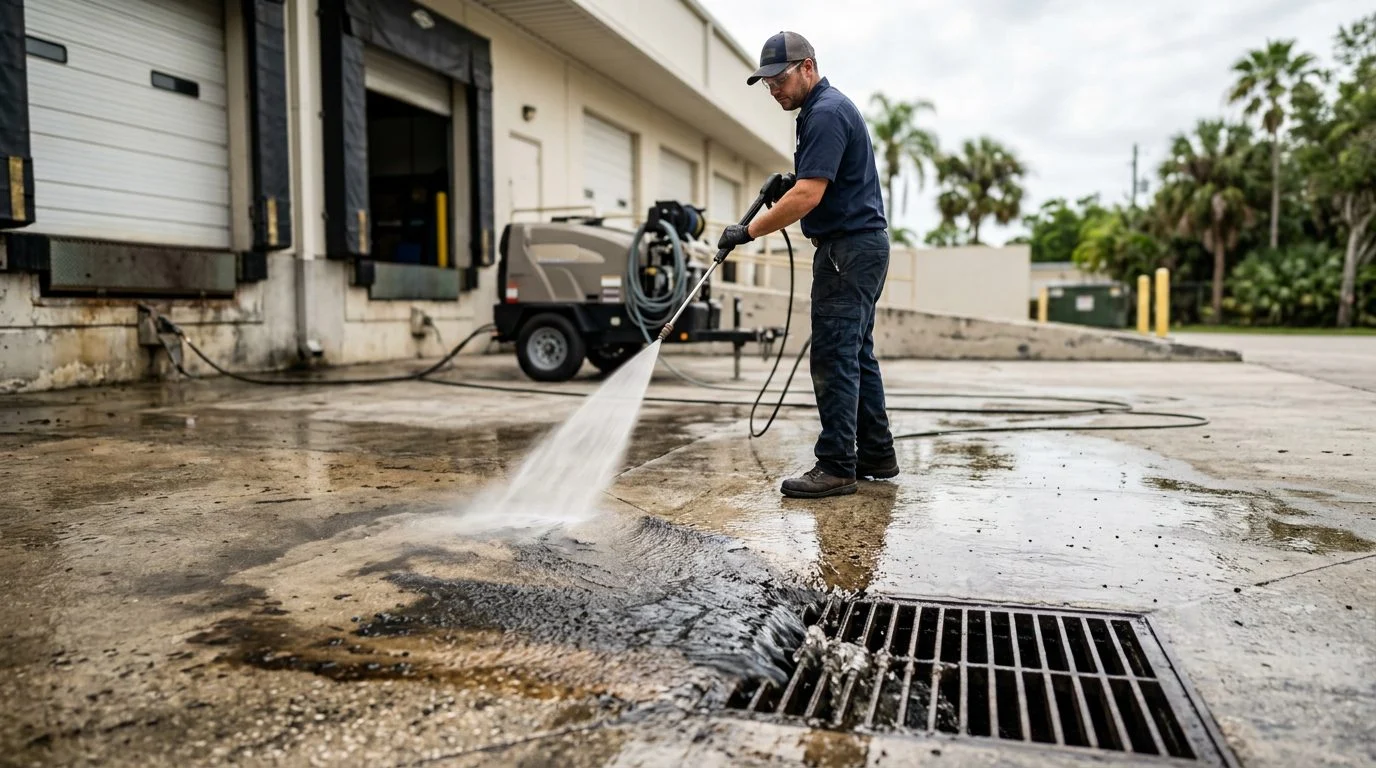
Pressure Washing | Palm Beach County
Soft Wash or High Pressure? Match the Method to the Surface
Choosing the wrong cleaning method can leave a property looking worse than before. Here is how to tell which approach suits your building and grounds.
By Ryan Jurney · Published November 24, 2026
You want a building cleaned, but you’re not sure whether high pressure is safe for its walls. Stucco, painted block, fiber cement siding, and glass are usually cleaned with lower pressure and a cleaning solution. Hard surfaces like concrete walkways can often take higher pressure.
This guide covers each surface type for Palm Beach County buildings. It explains why the method matters and how a site walk-through sorts the job. Getting that split right protects the finish and keeps the job on track.
The Short Answer: Which Building Surfaces Need Gentler Cleaning
Stucco, painted block, fiber cement siding, and glass are the surfaces most often cleaned with lower pressure and a cleaning solution.
The right method depends on the material, its condition, and what is on it. So one building can call for more than one approach. A cracked stucco wall may need a different plan than a sound wall right beside it.
Ask yourself what each surface is made of, how it’s holding up, and what’s building up on it. Listing walls, walkways, windows, and trim gives you a starting map before any work begins.
Lower pressure doesn’t mean weaker cleaning. It means the force matches what the surface can handle. The sections below cover each surface type first. After that, you’ll see where higher pressure still makes sense.
Not sure what your next step is?
Talk it through with our team — the first consultation is free, confidential, and carries no obligation.
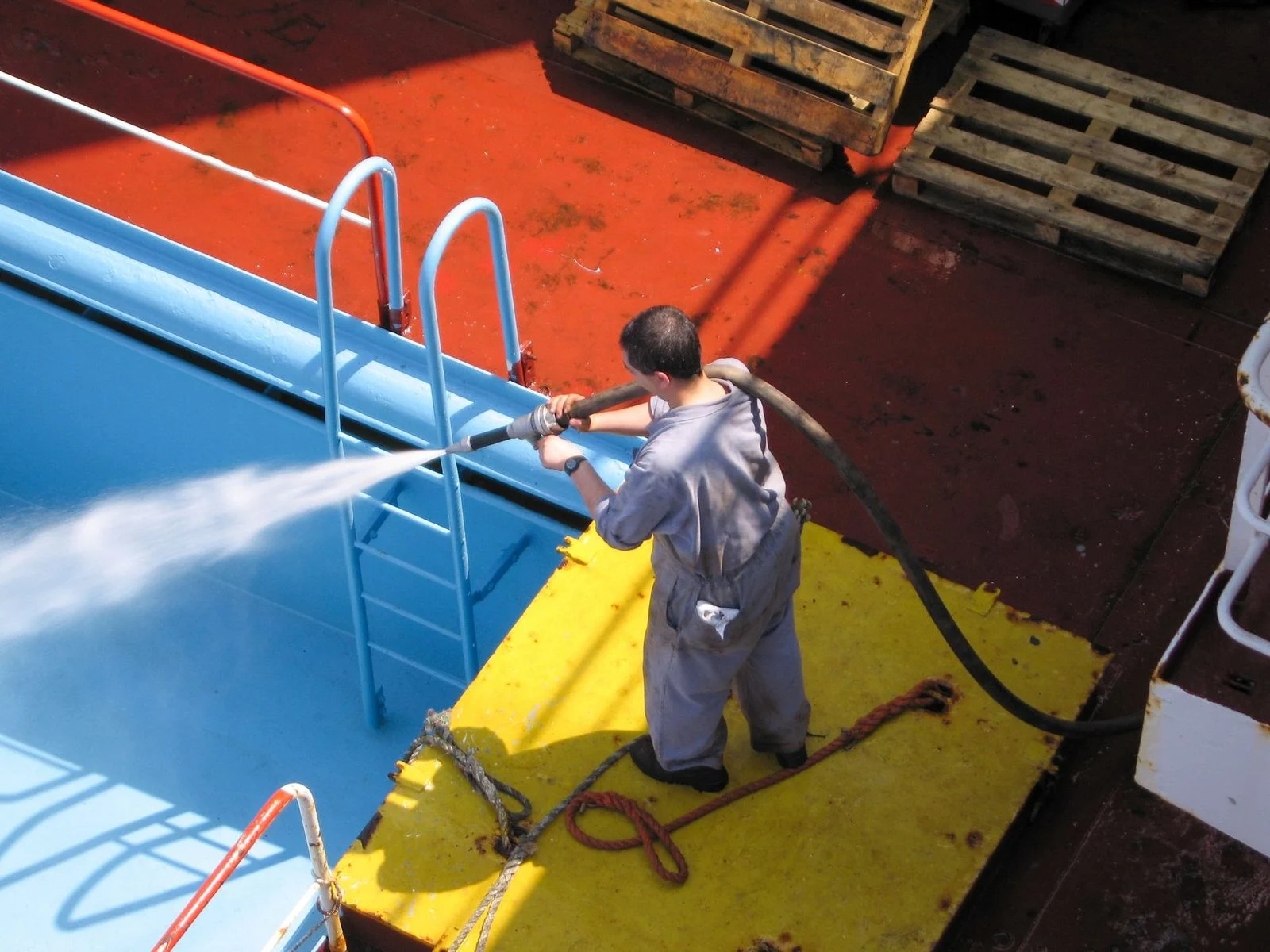
What Soft Washing and High-Pressure Washing Each Mean
High-pressure washing sends a concentrated stream of water at high force to strip dirt from hard, durable surfaces.
Soft washing works differently. It applies a cleaning solution at low pressure, lets the solution work on the surface, and then rinses it off. The wait before rinsing is part of that method.
The difference is the combination of solution and pressure. It isn’t just how hard the water hits the wall. Think of the solution as doing the loosening and the water as doing the rinsing.
So is soft washing better? It’s better for some building surfaces and not for others. The surface type decides the method, not a rule that one method always wins.
Picture a painted wall with mildew streaks. A solution can loosen the growth, so the job doesn’t rely on force alone. Our team sets the method for each surface before work starts.
Why Lower Pressure With a Cleaning Solution Is Used on Some Surfaces
Lower pressure with a cleaning solution is used when force alone could damage the surface or push water where it doesn’t belong.
High force can chip, etch, or strip paint and finish coats on softer or older materials. Once the finish is gone, the surface is harder to protect. Pressure at the wrong angle can do as much harm as pressure that’s too high.
High-pressure streams can also drive water behind siding, trim, and seals. Water that gets there can cause the very problems the cleaning was meant to prevent.
A cleaning solution works the other way. It loosens grime, algae, and mildew, so less force is needed to remove them. The trade-off is time, because the solution needs to sit before rinsing. This method is slower on the job.
Wash water matters too. For background on local water management, see the South Florida Water Management District. It also says runoff can carry pollutants from paved surfaces and properties.
Stucco and Painted Block: Why Gentler Cleaning Is Often the Right Call
Stucco and painted block usually call for soft washing because high force can damage the finish.
Stucco has a textured surface. High-force water can pit it, especially where the stucco is already cracked or worn.
Painted block is different. High pressure can strip the paint and leave the masonry underneath bare and exposed.
A soft-wash approach with a suitable cleaning solution is commonly used on both surfaces. Choosing the wrong method can leave a finish worse than it was before.
Before choosing any method, look for cracks, loose areas, and failing paint. Those signs tell you the surface needs an assessment first, not a standard spray.
If a stucco facade shows streaking or a painted block wall shows fading, the surface needs a closer look before anyone picks up a wand.
Fiber Cement and Glass: What to Know Before Cleaning
Fiber cement and glass both call for lower pressure, along with careful attention to edges and seals.
Fiber cement siding can be marked or damaged by high-force water. That’s why lower pressure and a suitable solution are often used on it.
Water pushed behind fiber cement panels, trim, or joints is another reason to avoid high-pressure methods. Check the sealant lines too. Worn sealant can let water in.
Glass and window areas need care around frames, sealants, and nearby surfaces. The method should be chosen so water isn’t forced into those spaces.
The cleaning solution, rinse method, and pressure should all match the material and its condition. A panel in good shape and one with hairline cracks may not get the same treatment.
Protect nearby surfaces too. Overspray from a wand can reach plants, doors, and seals that aren’t part of the job.
Where Higher Pressure Still Fits on Palm Beach County Properties
Concrete walkways, pavers, and other hard, durable surfaces are commonly cleaned with higher-pressure methods.
These surfaces can take more force than walls and glass. That’s why they suit higher pressure, as long as the surface can handle it.
Walkways in a shopping plaza, for example, often collect grime that a stream of water can lift off hard concrete. Frequency planning matters too, since walkways get walked on every day.
Hard surfaces still need care. Edges, joints, and nearby plants can be damaged by spray even when the surface itself is durable.
A single property often uses both approaches. Higher pressure goes on durable hard surfaces. Lower pressure with a cleaning solution goes on finished walls and glass.
Property owners and tenants also need to agree on who handles exterior cleaning. Settling that question in writing before work starts avoids confusion later. Our pressure washing service can cover both approaches in one plan.
Not sure what your next step is?
Talk it through with our team — the first consultation is free, confidential, and carries no obligation.
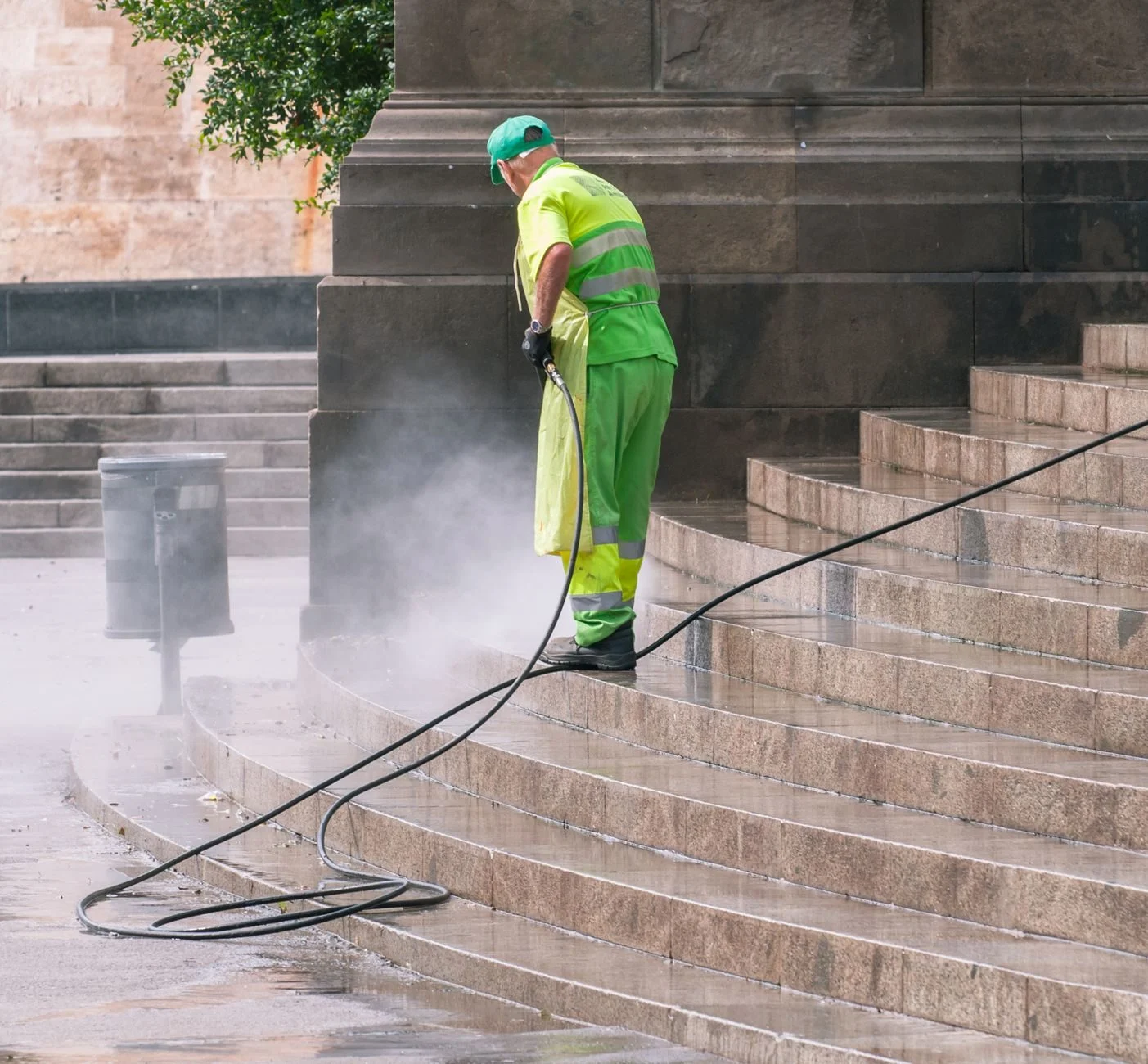
How a Walk-Through Assessment Sorts Your Building’s Surfaces
A walk-through assessment tells you which surfaces get soft washing and which can take higher pressure.
On site, our team checks the surface material, the paint or finish condition, and any cracks or loose areas. We also note the type of staining and the openings or seals near each surface.
Those details shape the method for each area. Contact our team to discuss the needs of your property.
Our team then walks you through the plan, so you can ask questions about each surface.
The first consultation is free, confidential, and carries no obligation to continue.
Is soft washing better than pressure washing?
It’s better for stucco, painted block, fiber cement, and glass. Hard walkways can often take higher pressure.
Can high-pressure washing damage stucco?
It can, especially where stucco is cracked or worn. Look at the surface before choosing a method.
Does pressure washing runoff reach storm drains in South Florida?
If your stucco facade is streaking or your painted block wall is fading, a walk-through can show which surfaces need soft washing and which can take higher pressure. Contact our office to set one up.
How Our Team Approaches Each Property
Surface first
Before any equipment is started, our team looks at the material, its condition, and what sits nearby, such as plants, glass, and fixtures.
Method matched to the material
We select soft washing or higher pressure based on what the surface can handle, not on what is fastest.
Scheduled around your operations
Work can be planned for times that keep walkways, entrances, and parking areas safe and usable for tenants, staff, and visitors.
Coordinated with your other services
Pressure washing can be scheduled alongside floor care, day porter service, and landscape maintenance.
Warning: Not Every Surface Can Take Pressure
Stucco that is cracked or worn, painted block, fiber cement, and glass can be damaged by high pressure. If you see any of these conditions, do not assume a stronger setting will do a better job.
Common Palm Beach County Surfaces
Soft wash surfaces
Stucco, painted block, fiber cement siding, and glass often respond best to a low-pressure method paired with a cleaning solution.
Surfaces that can take more pressure
Some hard walkways, driveways, and concrete areas can often be cleaned with higher pressure, depending on their condition.
Check for damage first
Cracks, loose paint, soft spots, and worn finishes call for a closer look before any cleaning begins.
Mixed-surface properties
Many buildings combine several materials. A single approach may not fit everything, so we plan each area separately.