
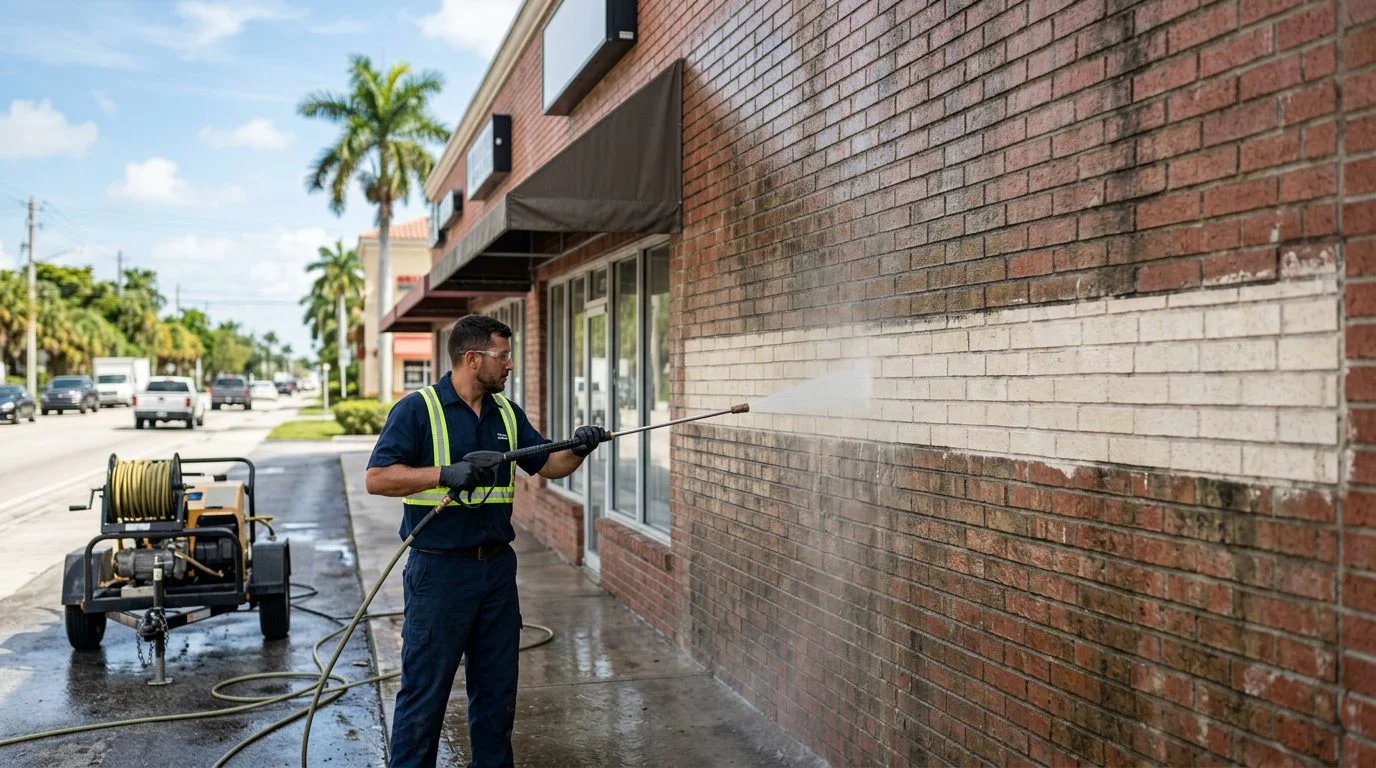
Pressure Washing · South Florida
Who Pays for Pressure Washing at Your Leased Florida Storefront?
Sidewalks, entryways, and parking areas often raise the same question for tenants and property managers. Here is how to sort it out before the work begins.
By Ryan Jurney · Published November 24, 2026
If you rent a storefront, you may wonder who pays when the sidewalk, parking lot, or dumpster pad needs pressure washing. When exterior cleaning or grounds work comes up, the written agreement is the first place to look.
This page covers where to look in the lease, how common lease types split costs, and how a written scope prevents disputes. Gator Protection, Inc. provides pressure washing throughout South Florida, including Miami-Dade, Broward, and Palm Beach counties. We do the cleaning.
The Lease’s Maintenance Clause Decides Who Pays
The maintenance and common-area clauses decide who pays for exterior pressure washing. Read them before you schedule any work.
Some leases name each area. One clause may say the tenant cleans the storefront glass and entry walk, while the landlord cleans the shared lot. Other leases use general words, such as “maintain the premises.” General wording can leave the question open. Two people can read the same phrase and reach different answers about a sidewalk.
Florida’s landlord-tenant statute covers nonresidential tenancies, which includes retail storefront leases (Fla. Stat. § 83.001). In practice, a cleaning crew works from the scope it is given. If that scope is silent about the sidewalk, nobody has clearly agreed to handle it. For a broader look at our exterior work, see our pressure washing overview for Miami-Dade condos and commercial properties.
If you can't tell whether your lease makes you or your landlord pay for cleaning the sidewalk or parking lot, we can walk the site with you and put the scope in writing. Talk it through with our team — the first consultation is free, confidential, and carries no obligation.
How Common Florida Lease Structures Split Exterior Costs
The lease type sets the starting point. Gross leases usually fold property upkeep into the rent, while triple-net leases pass shared costs to the tenant.
In a gross lease, the landlord typically covers property operating costs within the rent. A modified gross lease splits some expenses, and the agreed terms decide which ones. A triple-net (NNN) lease asks the tenant to pay a share of common area maintenance (CAM), the upkeep of lots, walkways, and other shared spaces.
Exterior cleaning of shared areas often falls into that CAM pool. Before you agree, check three things. Is exterior cleaning listed as a common-area expense? How is your share calculated? How does the yearly reconciliation report the charge? Ask for the cost breakdown in writing, before you sign, so the charge is easy to trace later.
Which Exterior Areas Are Usually Addressed in the Lease
Retail leases often address the storefront, sidewalk, parking area, and trash enclosure, and each one can fall on a different party. Look for each area by name.
Storefront and sidewalk. Check whether the lease assigns the facade and the sidewalk in front of your unit to the tenant or the landlord.
Parking lots and drive aisles. Shared lots, drive aisles, and loading areas are often treated as common areas, so their cleaning may be shared.
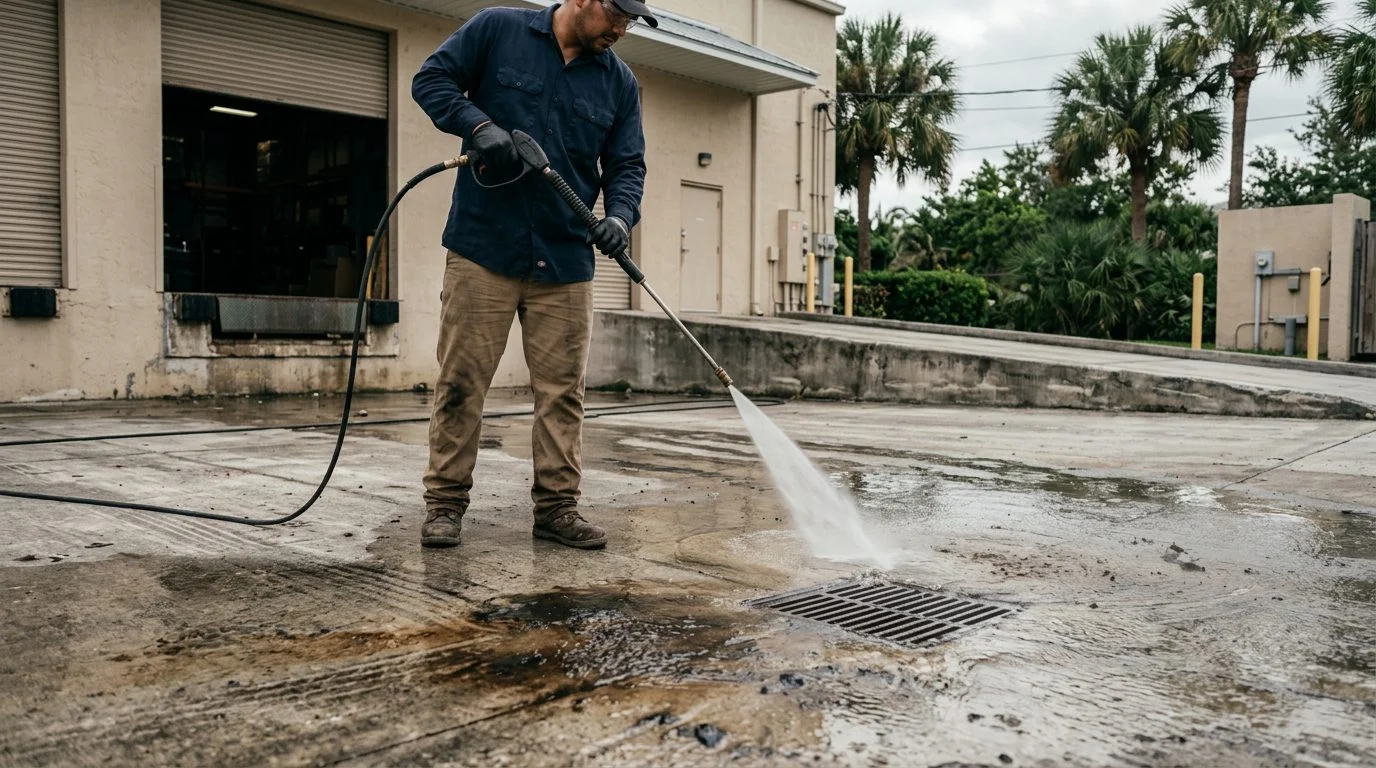
Dumpster pads and grease-impacted surfaces. These create disputes when the lease does not name them. Grease needs extra passes, so the scope should list them.
Walls, signage, and roofline. Some surfaces need landlord approval before cleaning. Read the access and contractor language first.
Parking lots and dumpster pads also need planning for runoff. The South Florida Water Management District says polluted runoff entering South Florida storm drains is discharged untreated into connected water bodies (South Florida Water Management District). Plan where wash water goes and keep debris out of drains. The Florida Department of Environmental Protection also runs a stormwater program for certain regulated sources (Florida DEP stormwater program).
How a Walk-Through Documents the Exterior Cleaning Scope
A walk-through turns the lease’s words into a written scope that both sides can check. It records each surface, its location, and its condition on the day of the visit.
Mark each exterior area on a site map. Note its approximate size or location, and take a dated photo of each one. Those photos set the starting condition for both the tenant and the landlord.
Next, write the frequency into the scope. A one-time job, a monthly visit, and a quarterly visit each mean different planning and different costs. Also state the sequence, such as shared lot first, then the sidewalk, then the dumpster pad. That way both parties follow the same plan.
After the work, take photos of the same areas from the same angles. Matched before-and-after photos give both sides a shared record if questions come up later.
Clause Terms to Check Before Agreeing to Exterior Cleaning
Check the definition of common areas, who hires the contractor, how costs are billed, and any notice rules. Each term can change who pays and who must approve the work.
Start with “common areas.” If the storefront, sidewalk, and parking area fall inside that definition, shared-cost rules may apply. Then check who selects the contractor and whether the landlord must approve exterior work. Review billing next, including any pass-through charge and annual reconciliation. Finally, note exclusions, such as painted or stucco walls, and any timing rules for work near occupied units.
Notice steps need close reading. If your lease ties notice to cleaning work, the exact wording controls.
Common Mistakes That Lead to Cost Disputes
Common mistakes include relying on verbal promises, assuming a general cleaning clause covers pressure washing, skipping notice, and skipping photos. Each one leaves room for a disagreement about who pays.
Verbal promises are the first trap. A landlord may say the lot is covered, but no one writes it down. Months later, a charge can appear that nobody remembers agreeing to. Put the agreement in writing and name the areas.
A general “cleaning” or “maintenance” clause may not cover exterior surfaces. Read the definitions before you assume it does.
Scheduling work without telling the landlord or nearby tenants can cause friction, even when the cost is clearly split. Give notice first.
A written lease can also say something different from what the parties agreed, through a scrivener’s error or inadvertence. A precise written scope reduces that risk.
Skipping before-and-after photos leaves no record of the starting condition or the finished work.
Not sure what your next step is?
Talk it through with our team — the first consultation is free, confidential, and carries no obligation.
Request a Quote for Your Storefront and Shared Areas
A written scope settles who does what before any work starts. We can walk the site with you, mark each exterior area, and record surfaces, frequency, and starting condition in writing.
If you rent a storefront and can’t tell whether your lease makes you pay to wash the sidewalk or lot, or you’re a landlord unsure what the lease asks of you, this is the time to pin it down. La consulta inicial es gratuita, confidencial y sin compromiso de continuar.
Send a request through our contact form, or call our office to set up a walk-through.
Does a triple-net lease make the tenant pay for parking lot cleaning?
It can. If the lease lists the lot as a common area, its cleaning may fall into shared expenses, so check the definition and the share formula.
Should exterior pressure washing be in writing?
Yes. A written scope with dated photos gives both sides the same record of what was agreed and what was cleaned.
Who pays for pressure washing in a leased retail space in Florida?
The lease decides. Check the maintenance and common-area clauses for each exterior area before work is scheduled.
Before Any Pressure Washing Is Scheduled
Read the lease definitions
Check how the lease describes common areas, exterior maintenance, and shared expenses.
Map every exterior surface
Note storefront sidewalks, drive-thru lanes, dumpster pads, and building walls so nothing is left unassigned.
Document current conditions
Dated photos taken before the work give everyone the same starting record.
Confirm the scope in writing
A written scope of work avoids disagreements about what was agreed and what was completed.
Put It in Writing
Verbal agreements about exterior cleaning are easy to misremember. Confirm the areas, frequency, and dates in writing before pressure washing begins.
Common Areas to Review in Your Lease
Storefront sidewalks
Frontage cleaning is often discussed alongside building access and signage.
Parking lots and drive lanes
Lot surfaces can be shared spaces, so check how their upkeep is described.
Dumpster and service areas
Grease, staining, and debris in back-of-house areas need clear assignment.
Exterior walls and entries
Building facades and entry paths may be handled differently from interior floor care.
Your First Consultation Is Free, Confidential, and Comes With No Obligation to Continue.
More of our services
- Pressure Washing Services for Miami-Dade Condos, Apartments and Gated Communities
- Pressure Washing Services in South Florida
- Pressure Washing Services in Miami-Dade County
- Plaza Walkway Washing: How Often in Palm Beach County?