
Pressure Washing | South Florida and Atlanta
Clean Your Entrance Without Closing Your Doors
Thoughtful scheduling, sectioned work, and clear communication with your staff help a storefront stay in use while its entrance is cleaned.
By Ryan Jurney · Published November 24, 2026
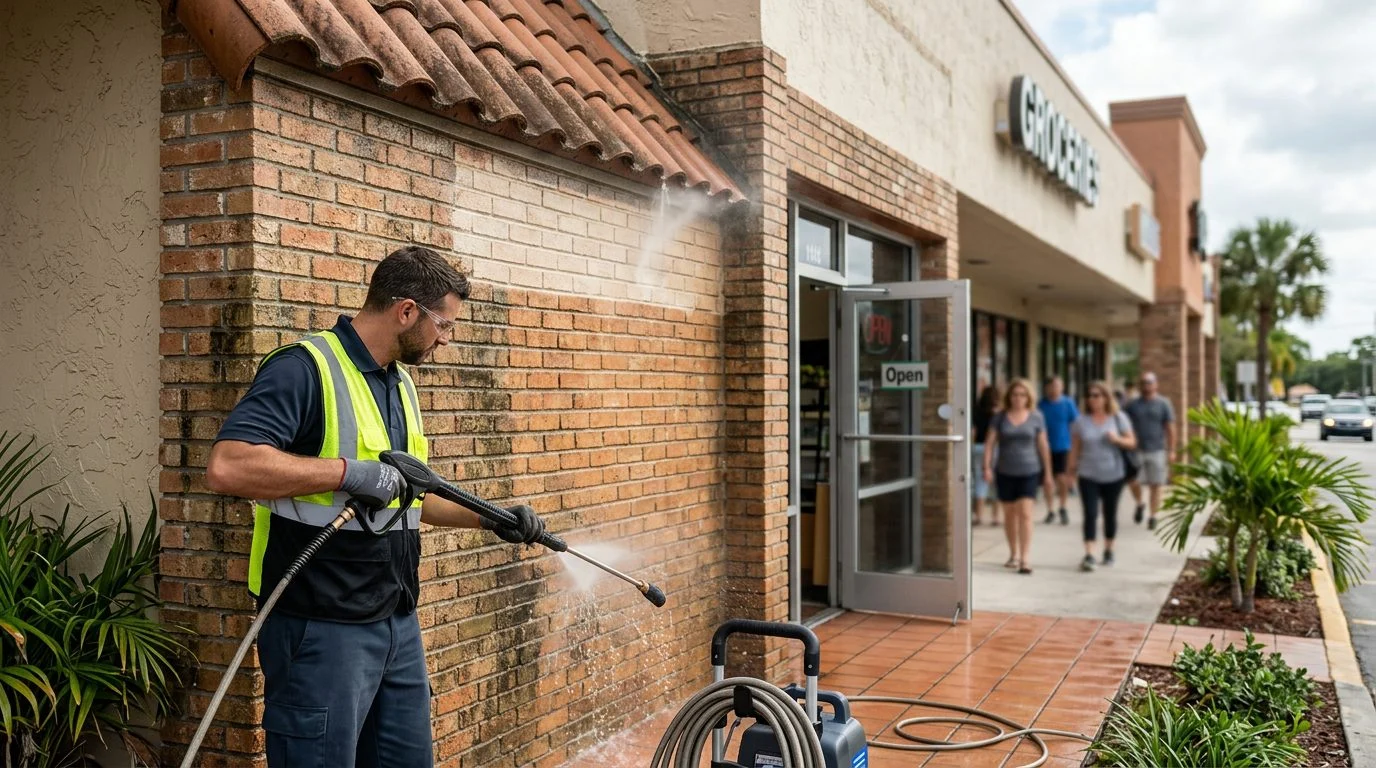
Your store entrance gets the most foot traffic and shows the most dirt. Grime, algae, and slick residue build up right at the door, and the doorway still has to stay open.
Short answer: you can pressure wash a store entrance without closing it. Work in small sections, during a set window, with one marked path open the whole time. Planning does most of the protecting.
Why Store Entrances Are Hard to Wash Without Disruption
A store entrance packs a lot into a small space. Foot traffic, a door threshold, glass, signage, and sidewalk all meet in one spot. Each one needs different care.
The usual problem is wet grime or algae at the threshold and on the walk leading in. That spot is also often the most slippery part of the property. Customers and staff walk through it all day, so you can’t simply shut it down.
A quick rinse may look fine, but it often leaves residue that comes back on the next wet day. A planned job takes more time up front and causes less disruption later. The goal is a usable doorway during the work, and planning protects it far more than speed does.
If a slippery or stained entrance is on your list and it can't close, we can talk through a schedule that keeps your doorway open. Talk it through with our team — the first consultation is free, confidential, and carries no obligation.
Plan the Work Around Your Open Hours
The right window is the time when the doorway sees the least traffic. That usually means before opening, after closing, or a slow stretch of the day. Each choice changes who can get in and out.
Before opening gives the crew a clear entrance and lets the surface dry before customers arrive. It may mean early starts for staff. After closing avoids most customers, but the crew works while the store is still lit and the door may stay locked behind them. A slower weekday afternoon can work for a small job if the store agrees in advance.
Tell your staff the plan in writing. Front-of-house staff should know when equipment will be out, which path stays open, and who answers customer questions. Surprise hoses across the entry cause more trouble than the wash itself.
In shopping plazas, the walkway is often shared. Confirm the schedule with the property manager and other tenants before the crew arrives, so no one is caught off guard.
Sequence the Work So the Doorway Stays Passable
Wash in sections, starting farthest from the door and finishing at the threshold. The entry stays the last area to get wet, so it can dry sooner.
Mark one clear path to the door at all times. Cones or signs at the edges of the work zone show customers where to walk. Keep hoses and equipment out of that path, and move them only between passes.
Drying time matters as much as the wash. Wet concrete is slick, and a freshly cleaned walkway may stay wet longer than people expect, especially in shade. Ask the crew how long the surface needs before foot traffic returns, and agree on that before the job starts.
Walk the path with the manager at the end. Look for standing water and missed spots, and confirm the doorway works before you reopen it.
Protect Glass, Frames, Signage, and Nearby Plants
Protect glass, painted frames, signs, and plants before the first pass. Adjust pressure for each surface, because glass and painted metal need gentler settings than concrete.
Avoid spraying upward into gaps around frames, door seals, and siding. Angle the spray downward when in doubt, and keep the wand moving so it doesn’t sit on one spot.
Cover or remove signage near the door. Cover light fixtures and outlets close to the spray. Walk the entrance with the crew before work starts and point out anything delicate. Plants near the door need covering or a rinse afterward, since runoff can carry cleaning products onto them.
Soft-wash methods are often discussed for delicate surfaces. Ask the crew which method they plan to use on each surface before the job begins.
Manage Slip Risk and Customer Safety During the Job
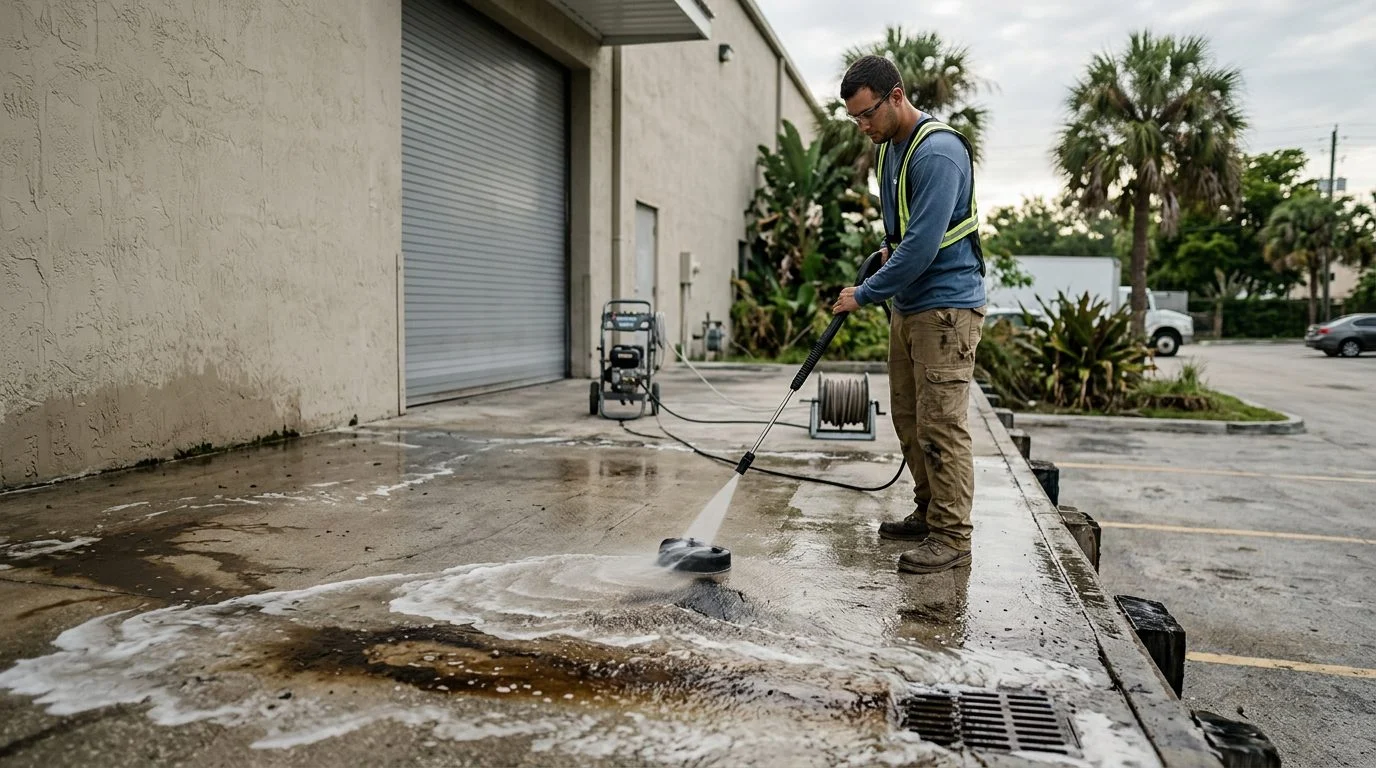
Wet concrete and cleaning residue are slip hazards. Mark the wet area and keep people off it. Wet-floor signs and a clear path protect customers and staff.
Runoff needs a plan too. Direct wash water away from storm drains and capture it where possible.
For reference on best management practices for mobile vehicle washing, see the Florida DEP mobile vehicle washing guidance. Ask the crew where wash water goes before the job starts.
Finish cleanup before reopening. Residue left on the walk can make the doorway slick the next morning.
Questions to Settle Before the Crew Arrives
Settle the work window, the surfaces included, the marked path, and your staff contact before work starts. Put those answers in writing.
Confirm which surfaces are in scope, such as sidewalk, threshold, glass, or nearby landscaping. Ask how the entrance will be cordoned off and what happens if a customer walks into the work area. Name one person on staff who can answer questions during the job.
Ask for proof of insurance before the crew starts. A property manager may need a copy for a shared plaza. Write the agreed plan down so store management and the crew work from the same expectations.
Can you pressure wash a storefront while the store is open?
Yes. Sectioned work with one marked path open lets most entrances stay in use.
What time is right to pressure wash a business entrance?
The right time is when the doorway has the least traffic, such as before opening or after closing. Agree on it with staff in advance.
Does pressure washing near a store entrance require closing the door?
Not always. Sectioned work and a clear path can keep the doorway open during the job.
Not sure what your next step is?
Talk it through with our team — the first consultation is free, confidential, and carries no obligation.
Talk Through Your Entrance With Our Team
Arranging this for an owner or landlord can feel like a lot to carry. You may be the one answering customers about a slick doorway while the job is still on the calendar.
Our team can talk through your entrance with you. Share your store hours, the surfaces involved, and where customers walk in. We can then discuss a plan that keeps the doorway open. Gator Protection, Inc. also offers pressure washing services and day porter service to keep entries clean between scheduled washes.
La consulta inicial es gratuita, confidencial y sin compromiso de continuar.
When you’re ready, send us a message through the contact form and describe your entrance.
How We Plan Entrance Pressure Washing
Timing Around Your Traffic
We look at when your doorway is busiest and plan the work for quieter hours, such as before opening or after closing.
Sectioned Work Areas
We clean the entrance in marked sections and keep one clear path open, so customers and staff can still reach the door.
Coordination With Your Staff
We agree on the schedule, work zones, and any access needs with your team in advance, so everyone knows what to expect.
Care for Surrounding Surfaces
Our team protects nearby walkways, landscaping, and fixtures as part of the job and keeps the work area tidy throughout.
Plan Before the First Pass
Do not start pressure washing an entrance during peak customer hours without a clear plan. Confirm the schedule, the open path, and who will be notified before the work begins.
Steps for a Smooth Entrance Cleaning
1. Walk the Site Together
We review the entrance, sidewalks, and nearby surfaces with you to identify the areas that need the most attention.
2. Set the Work Schedule
We choose a window with the least foot traffic and agree on it with your staff ahead of time.
3. Clean in Sections
We work one zone at a time, keeping a marked path open for customers, deliveries, and staff.
4. Final Check and Cleanup
We inspect the finished area, remove debris, and confirm the entrance is ready for regular business.