
Pressure Washing | South Florida Retail
Florida Retail Chain Pressure Washing RFP: What to Include
By Ryan Jurney · Published November 24, 2026
Your chain wants several Florida stores pressure washed, and the bids come back in different shapes. One vendor prices the storefront. Another prices the parking lot. Nobody prices the same job.
A pressure washing RFP checklist for retail facilities should define each store’s measured surfaces, the task for each one, the work hours, the runoff rules, the insurance and reporting terms, and a price line for every item. That is what lets every bidder price the same scope. This guide walks through each part for facilities managers and procurement buyers who will issue the RFP. Gator Protection, Inc. provides pressure washing services across South Florida, including Miami-Dade, Broward, and Palm Beach counties.
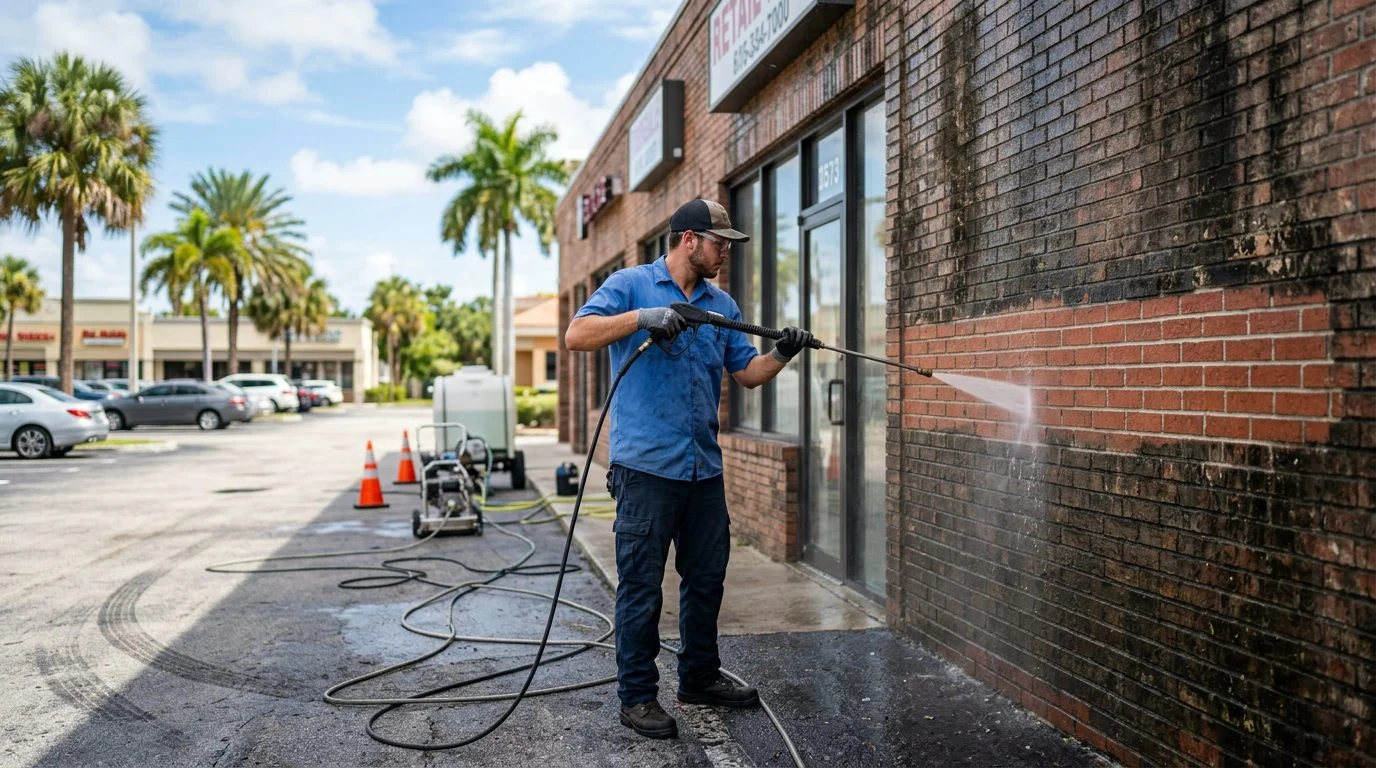
Start with a Site-by-Site Inventory of Every Florida Store
Each store should be listed by its own address, county, and measured footprint, not as a generic “store.”
A multi-store RFP breaks down when it describes one vague location. A small storefront in a strip center needs a very different crew than a large corner store with a drive-thru. Bidders who lack the facts will guess, and their guesses won’t match.
For every store, collect these fields:
- Street address and county
- Building footprint in square feet
- Total lot size
- Number of customer and service entrances
- Allowed access hours and who holds keys or badges
Attach a site map or aerial view for each location. Mark the work boundaries, including sidewalks, loading docks, and the dumpster pad. Two bidders reading the same map will measure the same lot. Note any gates, fences, or shared areas too, since those change how crews move equipment and where they can stage it.
For an overview of the service category, see our pressure washing services overview.
If your chain is preparing a pressure washing RFP for stores in Miami-Dade, Broward, or Palm Beach, reach out through our contact form and we'll start with your store list. Talk it through with our team — the first consultation is free, confidential, and carries no obligation.
Define the Surfaces and Tasks for Each Location
List each surface category as its own line, and state the task for it: rinse, wash, or heavy spot treatment.
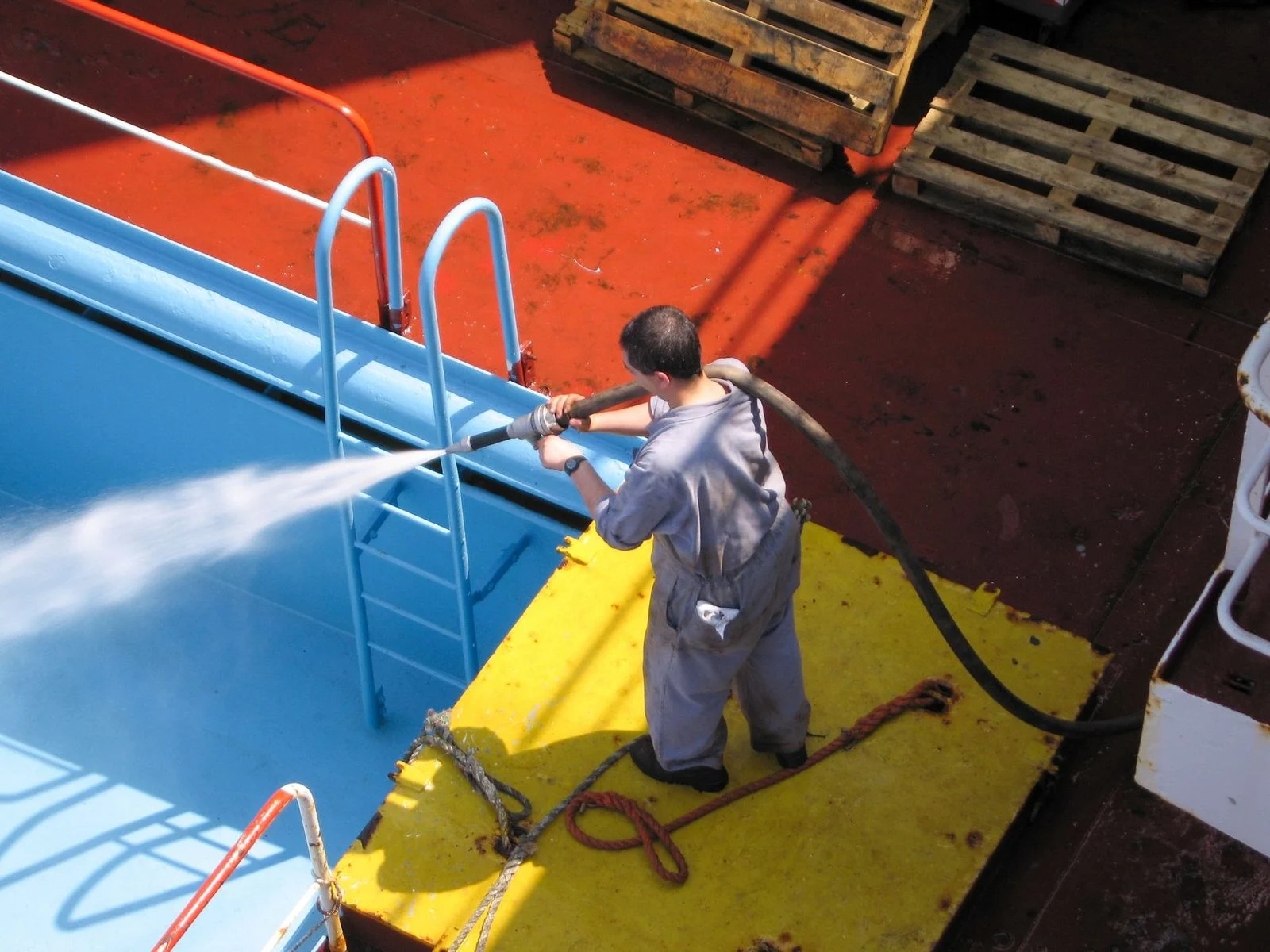
A retail site usually has several distinct surfaces. Storefront facades, sidewalks, walkways, drive-thru lanes, loading docks, dumpster pads, and parking areas each need their own row. Lumping them together hides the work and makes bids hard to compare.
The surface material changes the method. Concrete, brick, stucco, and painted metal don’t respond the same way to pressure and cleaning product. Name the material for each row. Ask bidders to confirm it during a site walk.
Give an approximate square footage for every surface, and price on measured areas rather than estimates. Lot area is one of the main drivers of crew time, so a measured number keeps bids on the same footing.
For how lot size affects scheduling, read how long it takes to pressure wash a 40,000 square foot retail lot.
Set Frequency, Timing, and After-Hours Access
State how often each surface needs work and which hours the crew may work on site.
Separate recurring service from one-time projects. A recurring schedule covers routine rinsing of entries and walkways. A one-time project might be a full lot wash before a reopening. Each needs its own schedule and its own price.
Define the work window for each store. Some locations can be serviced during open hours with cordons around the work area. Others need work after closing. Say which applies, and say what happens if the store changes its hours.
Write customer-area rules into the RFP as well. Require walkways to stay clear. Require cordons and signs during work, so shoppers don’t walk through spray or wet pavement.
After-hours work raises access questions. Spell out who opens the gate, how key or badge handling works, and whether the alarm must be disarmed or coordinated. Ask bidders to list the staff who will need access.
Broward stores raise their own timing questions. See scheduling pressure washing at night for Broward retail sites.
Coordinate Exterior Work with Interior Floor Care
The RFP should state the order of exterior washing and interior floor work, because each can undo the other.
Exterior washing moves water, dirt, and residue. Water and grit can track into entrances and onto lobby or vestibule floors. A wet, dirty entry can create a slip hazard and a cleanup job for someone else.
Floor care adds another layer. If floors are being stripped or refinished, timing matters. Fresh finish needs time before foot traffic, so the RFP should name which work comes first.
Require bidders to describe how they will protect entryways, lobby floors, and door mats during exterior work. Protection should be written into the bid, not assumed.
Gator Protection also offers floor care maintenance and day porter service, which can handle upkeep between washing cycles. For the sequencing question in detail, read whether to pressure wash before or after lobby floor stripping.
Specify Water, Runoff, and Site Protection Requirements
The RFP should require bidders to explain how wash water and loosened debris will be contained and kept out of storm drains.
Runoff matters on every store lot. Stormwater flowing off paved surfaces can carry pollutants.
Construction-related work calls for careful planning.
Then write the controls into the RFP:
- A list of permitted cleaning agents, with a requirement that bidders name each one
- Protection for landscaping, signage, glass, vehicles, and storefront finishes
- A cleanup standard, including debris removal, after every visit
Set Insurance, Documentation, and Reporting Expectations
Require proof of general liability and workers’ compensation coverage before any crew starts work.
Ask for a certificate of insurance that shows both coverages. Name the chain as an additional insured where its risk team requires it. These are terms you set in the RFP, so write them plainly.
Next, ask for a written safety plan. It should cover equipment, chemical handling, and traffic or pedestrian control around the work area. The crew should follow that plan on every visit, not only the first one.
Define what the contractor reports after each visit. One workable package is a completion log, photos of the finished areas, and a written note of any surface damage found. Name the person on the chain’s side who receives each report.
Set a method for documenting issues too. A simple issue log with the date, store, location, and a photo gives the chain and the vendor the same facts to review. Keep reports tied to each store. A single company-wide summary hides what happened at one location.
Not sure what your next step is?
Talk it through with our team — the first consultation is free, confidential, and carries no obligation.
Make Every Bid Price the Same Scope
Require pricing broken out by store and by surface category, so every bid can be compared line by line.
A single lump-sum number hides the work. Two bids can look close while one skips the dumpster pad and the other includes it. Line items make that difference visible.
Separate one-time project pricing from recurring service pricing. The chain can then see what a seasonal wash costs and what routine service costs each month.
Ask bidders to list assumptions, exclusions, and any charges for materials or water use in writing. A bid with a water charge buried in the fine print isn’t priced the same as one that includes water.
State in the RFP that a bid skipping a surface or a store is incomplete. Require a response to every line. A blank line is a gap in the scope, not a saving.
Include a comparison sheet in the RFP packet with the same rows for every bidder. Bidders then fill in the same grid, which makes the award decision easier to explain.
Request a Free First Consultation for Your Florida Stores
Multi-store chains often need one shared scope before an RFP goes out.
This fits a chain with stores in Miami-Dade, Broward, or Palm Beach that will be bid together. Bring your store list, any site maps, and your notes on surfaces and hours. The consultation covers the inventory and surface lists you need before the RFP is published.
The first step carries its own terms: La consulta inicial es gratuita, confidencial y sin compromiso de continuar. The consultation is a planning step for the RFP itself, not a bid.
Frequently Asked Questions
What should a pressure washing RFP include for a retail chain?
It should list each store’s measured surfaces, the task for each surface, work hours, runoff controls, insurance, reporting, and line-item pricing.
Should exterior washing happen before or after floor stripping?
The RFP should state the order, because exterior water and grit can reach interior floors.
Can pressure washing be done after hours in Broward County?
Work hours are a term you set in the RFP. Write in access, key or badge, and alarm details for each Broward store.
If your chain is preparing a pressure washing RFP for stores in Miami-Dade, Broward, or Palm Beach, reach out through our contact form and we’ll start with your store list.
Why a Detailed RFP Matters for Retail Chains
Store-by-Store Detail
Each location has its own surfaces, traffic, and access rules.
Defined Work Hours
Stating when crews can work, such as after closing, prevents surprises for store operations and customers.
Clear Responsibilities
Spelling out insurance, runoff controls, and site protection helps both sides understand who does what.
Set the Order of Work
State whether exterior washing happens before or after any interior floor work. Exterior water and grit can reach interior floors, so the sequence should be written into the RFP.
Core Sections Every Retail RFP Should Include
Store List and Site Details
Name every location, its address, and any access notes, such as gate codes, loading areas, or restricted zones.
Surfaces and Tasks
Describe each surface to be cleaned, the method expected, and any areas that need extra care or protection.
Reporting and Pricing
Ask for completion reports and line-item pricing so each store's cost and results can be reviewed clearly.