
Pressure Washing | Palm Beach County
Plaza Parking Lots That Look Cared For Every Day
A clean lot sets the first impression for every shopper, tenant and delivery driver who arrives at your plaza.
By Ryan Jurney · Published November 24, 2026
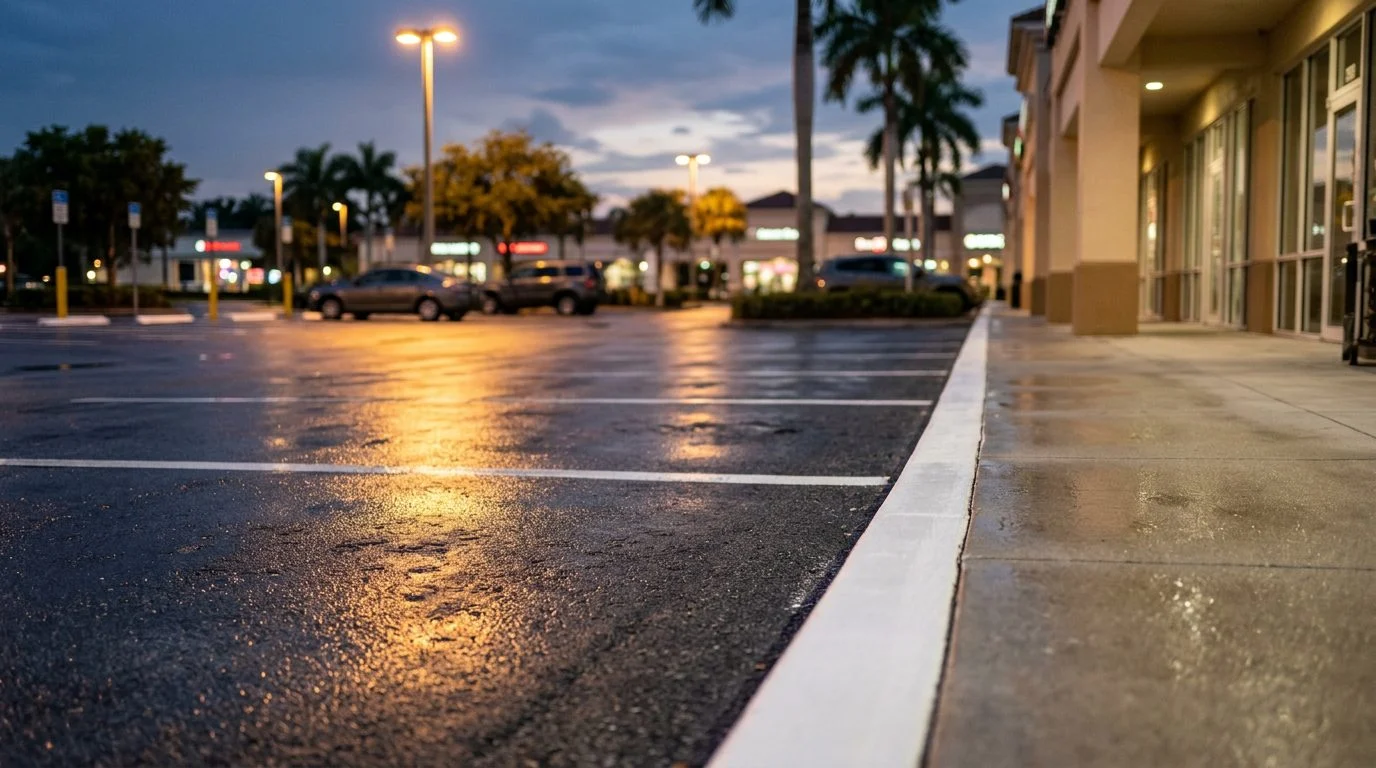
Your shopping plaza’s parking lot is one of the first things tenants and customers notice. Oil drips, tire marks and grit along the curbs can make an entire center look worn. A set pressure washing cycle keeps the lot clean and safer to walk and drive on.
Shopping plaza parking lot pressure washing is a scheduled wash of the paved areas that carry daily traffic. It repeats on a cycle that fits how busy the plaza is. Gator Protection, Inc. provides commercial pressure washing across South Florida, including Palm Beach County.
What Shopping Plaza Parking Lot Pressure Washing Covers and Who It Is For
Shopping plaza parking lot pressure washing is a high-pressure wash of the surfaces customers and tenants use every day. It suits plaza managers and property managers who want the lot kept clean on a steady schedule, not only after a problem appears.
The service fits a few common situations:
- A center with heavy customer traffic, where stains and grime build up faster than occasional cleanups can handle.
- A property manager who wants a predictable visit plan for budgeting and tenant communication.
- A plaza with shaded areas where dirt and mildew collect between visits.
It helps to know the difference between two kinds of work. A recurring wash is a planned visit repeated on a set cycle to keep the lot in regular condition. A one-time restoration wash is a single, deeper job for a lot that has been neglected. A plaza may start with a restoration wash and then move to a recurring plan. Gator Protection serves Palm Beach County plazas as part of its South Florida commercial work.
If your plaza's drive aisles are stained or its curb lines are oily before a busy season or lease review, reach out for a quote. Fill out the contact form or call the office. Talk it through with our team — the first consultation is free, confidential, and carries no obligation.
What Is Included in a Parking Lot Wash
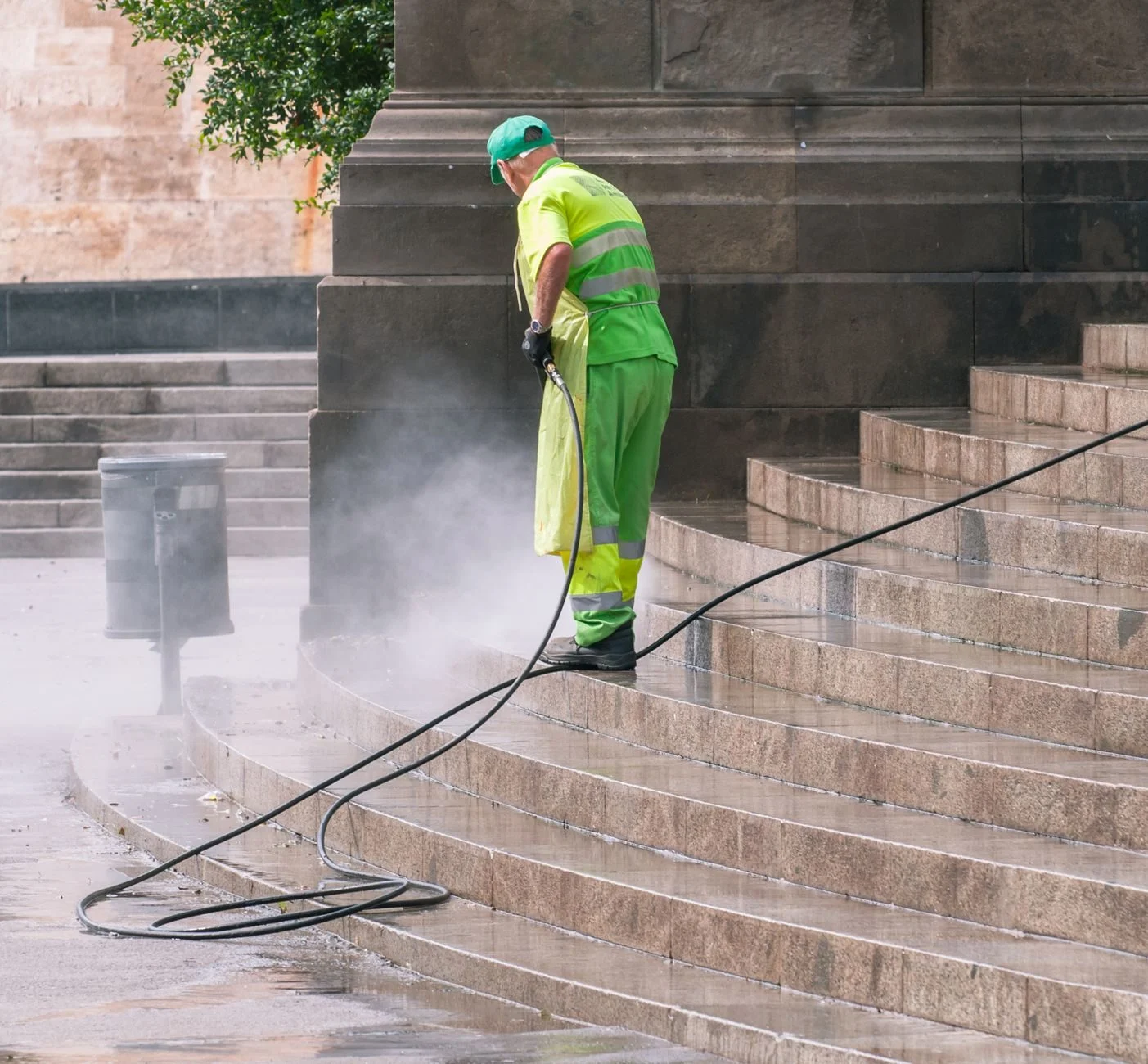
The wash covers the parking field, drive aisles, curb lines and crosswalks. Walkways leading to storefronts are included when the written scope lists them.
Common problems the wash addresses include:
- Oil drips and tire marks in parking stalls and at the busiest spots.
- Dirt, grit and debris that build up over time.
- Debris along curb lines and gutters.
- Grime and mildew in shaded areas.
Before any work starts, the team reviews the surface. Asphalt and concrete respond differently to pressure and cleaning products, so the approach depends on the material and its condition. Loose debris is cleared first so it isn’t pushed toward drains during the wash.
Painted striping and crosswalk paint are cleaned around, and the scope for those markings is written into the quote. Wash water matters here too. Runoff that carries pollutants can reach connected waterways untreated after it flows through storm drains. Keeping those out is part of a responsible job.
How the Process Works, Step by Step
The process starts with a call, a contact form or a quote request. It ends with a written plan for the lot.
- Contact the office. Describe the plaza, its approximate size and the areas you want washed. Use the contact form or call the office.
- Free first consultation. The first consultation is free, confidential, and carries no obligation to continue.
- Site review. The team looks at lot size, surface type, stain history, traffic patterns and the cycle you want.
- Written quote. The quote lists the areas, frequency, washing schedule and any items left out of scope.
- Scheduled wash. The team works on the agreed schedule, explains the sequence of work and clears up when finished.
- Walkthrough. You and the team review the results and set the next visit in the cycle.
Timing depends on the lot’s size and condition, and the written quote states the schedule before work begins. Nothing starts until you have that plan in hand.
How a Recurring Cycle Is Set Around Tenants and Customers
A recurring cycle is set by how much traffic the lot carries and how the plaza wants it kept between visits.
Examples include weekly, monthly or quarterly visits. A lot with heavy daily use and visible oil spots may need a shorter cycle than a lightly used lot. The site review and walkthrough determine which cycle fits.
Scheduling works around the plaza’s day. Visits can be planned around store hours and peak shopping times. Washing in sections lets parts of the lot stay usable while the rest is being done. Signage alerts drivers to work zones, and delivery access can be planned ahead with tenants.
The cycle is not fixed forever. After a walkthrough, the frequency or the areas can change if conditions change. A new tenant with heavy delivery traffic is one example.
Why Property Managers Work With Gator Protection
Gator Protection pairs pressure washing with its other commercial services, so one provider can cover plaza upkeep.
The firm offers day porter service, floor care maintenance, landscape services and pressure washing. A property manager can coordinate those services under one provider instead of several separate contacts. The business has support staff and office staff who handle scheduling and quotes.
Its service footprint covers South Florida, including Palm Beach County, and parts of Atlanta, Georgia.
Each quote is tied to the actual lot. It spells out the scope, surface notes and cycle in writing, so you can review the terms before you decide.
Questions Property Managers Ask Before Booking
Most questions come down to scope, timing and how the quote is built.
How is a quote prepared?
The team reviews the lot, the surface and the cycle you want. Then it writes the quote with areas, frequency and schedule.
How often should a plaza lot be washed?
The right cycle depends on traffic, stains and the plaza’s needs, and the walkthrough sets it.
Can washing happen during store hours?
Yes, the schedule can be planned around store hours and delivery windows. Washing in sections keeps parts of the lot open.
Does the service cover crosswalks and curb lines?
Yes. Crosswalks and curb lines are part of the scope, and painted markings are cleaned around as the quote states.
Does washing send dirty water into storm drains?
It should not.
Not sure what your next step is?
Talk it through with our team — the first consultation is free, confidential, and carries no obligation.

Request a Quote for Your Plaza Parking Lot
If stained drive aisles, oily curb lines or faded crosswalks are holding back your plaza before a busy season or a lease review, reach out. Fill out the contact form or call the office to request a quote, and the team will walk through what your lot needs.
How We Approach Your Plaza
On-Site Walkthrough
The team reviews the lot, its surface and the cleaning cycle you have in mind before anything is scheduled.
Written Quote
Your quote lists the areas, the frequency and the schedule, so you know exactly what is included.
Planning Around Your Hours
We talk through store hours and tenant access so the work fits how your plaza operates.
Free First Consultation
The first consultation is free, confidential and carries no obligation to continue.
What a Plaza Lot Cleaning Can Include
Parking Stalls and Drive Aisles
Removal of built-up grime, tire marks and everyday residue from the surfaces drivers use most.
Sidewalks and Walkways
Cleaning of pedestrian paths that connect parking to storefronts and entrances.
Entrances and Storefront Edges
Attention to the areas around doors and curbs where stains and debris tend to collect.
Ongoing Cycles
Recurring visits set at a frequency that fits your traffic, stains and plaza needs.
Tip for Plaza Owners
When you reach out, share your store hours, tenant access rules and any problem areas. This helps the walkthrough set a practical schedule and a clear quote.